
Edition – AI & Digital Transformation Leaders Shaping the Future of Business — 2026
In an era where artificial intelligence, digital disruption, and rapidly evolving business models are reshaping the way organizations operate, successful transformation requires more than adopting new technologies. It demands leaders who can connect vision with execution, innovation with measurable outcomes, and technology with the people and systems responsible for turning change into lasting impact.
Among the leaders helping organizations navigate this transformation is Nizar Khoja, an AI-powered transformation leader with more than two decades of experience spanning digital transformation, enterprise agility, strategic execution, and organizational change. Known for combining visionary thinking with hands-on execution, Nizar helps organizations approach complex transformation with greater clarity, discipline, and confidence.
A recognized AI Strategist and systems thinker, Nizar specializes in embedding OKRs, Agile, and Business Agility into organizational DNA, enabling businesses to translate strategy into measurable outcomes. His work extends into AI maturity assessments, Generative AI agent development, and responsible AI adoption, helping organizations identify where emerging technologies can create meaningful value while maintaining the governance and discipline required for sustainable implementation.
What distinguishes Nizar’s approach is his ability to move seamlessly between high-level strategic vision and implementation detail. He has led enterprise-wide OKR programs while also building AI-powered solutions for startups and global enterprises. His experience spans diverse industries, including finance, healthcare, retail, and telecommunications, giving him a broad understanding of how transformation must adapt to different organizational environments.
Beyond technology and strategy, Nizar is deeply committed to leadership development. As a coach and enabler of organizational growth, he has guided senior executives and teams, including through work with Sun Life, RBC, and Deloitte’s clients, helping leaders embrace agile mindsets, accelerate innovation, and cultivate cultures of continuous learning.
At the intersection of strategy, technology, leadership, and transformation, Nizar represents a forward-looking approach to business innovation—one that recognizes that the future belongs not simply to organizations that adopt new technologies, but to those capable of continually learning, adapting, and turning innovation into action.
CEO Scoop Magazine proudly features Nizar Khoja in the special edition, “AI & Digital Transformation Leaders Shaping the Future of Business — 2026,” recognizing his contributions to AI strategy, enterprise agility, digital transformation, and the advancement of future-ready organizations.
Please Share the Beginning of Your Career Journey With Us.
I have always thought of myself as a global citizen. I grew up in Pakistan, moved to the United States after high school to begin the earliest part of my career, and later settled in Canada, where the most defining chapters of my professional life have unfolded. Moving across these three worlds shaped how I see people, business, technology, and opportunity. From a young age, I was restless in the best possible sense—I always wanted to explore something different from what was expected of me.
My entrepreneurial education actually began long before I entered a classroom. When I was around ten, I spent my summer holidays with my father and uncles at their electronics franchises in Pakistan. That was where I first learned that you can sell almost anything when you truly understand what a person needs. Later, running convenience stores taught me lessons no textbook could—how to read people, connect with every kind of customer, and find common ground across differences. Those experiences gave me an instinct for people and commerce that continues to underpin my work today.
I was fortunate to have a strong support system throughout that journey. My parents provided financial backing, while my elder cousins guided me and supported me with housing and mentorship during my university years in Seattle. I never take that support for granted, and it is a big part of why giving back matters so much to me today.
Academically, I studied Business Administration at Seattle University, combining finance, eCommerce information systems, and computer science. That blend of commercial and technical disciplines set the pattern for much of my career. I began as a developer and systems analyst, but early on I made a decision that surprised many people around me: I turned down an offer from Amazon to join a startup instead.
To many, that decision looked like walking away from a sure thing. To me, the startup was where I believed I would learn the most—and it was. I developed my skills as an entrepreneur, technologist, and business professional simultaneously. It was challenging; resources were tight, and the early stages involved significant financial struggle. But that pressure forged two qualities I value most in myself: resilience and a “pivot in the moment” mindset. When you have had to make something work with very little, you never lose that resourcefulness.
Then I made the move to Canada, and that is where my career truly began to take shape. I settled in the Toronto area and started working across some of the country’s most respected organizations, gradually shifting from hands-on delivery into enterprise transformation.
I led digital and agile initiatives at Rogers and, through agency work, helped redesign Walmart Canada’s eCommerce platform. Those experiences provided early proof that the right technology, delivered in the right way, can fundamentally change a business.
Over time, I moved into senior transformation roles, spending several years as a Director of Agile Delivery at RBC, then leading enterprise agility and transformation programs at Sun Life, and advising TD Bank through Deloitte. Canada is also where I founded eWizTech and co-founded OKR Cohort, allowing me to build my own ventures alongside my enterprise work.
What has consistently pulled me forward has never been technology for its own sake. It has been the opportunity to see how the right technology, introduced in the right way, can transform how people work and expand what they are capable of achieving.
Canada gave me the canvas to do that at scale, and it remains the home base from which I continue this work today.
Could You Highlight the Key Offerings of eWizTech?
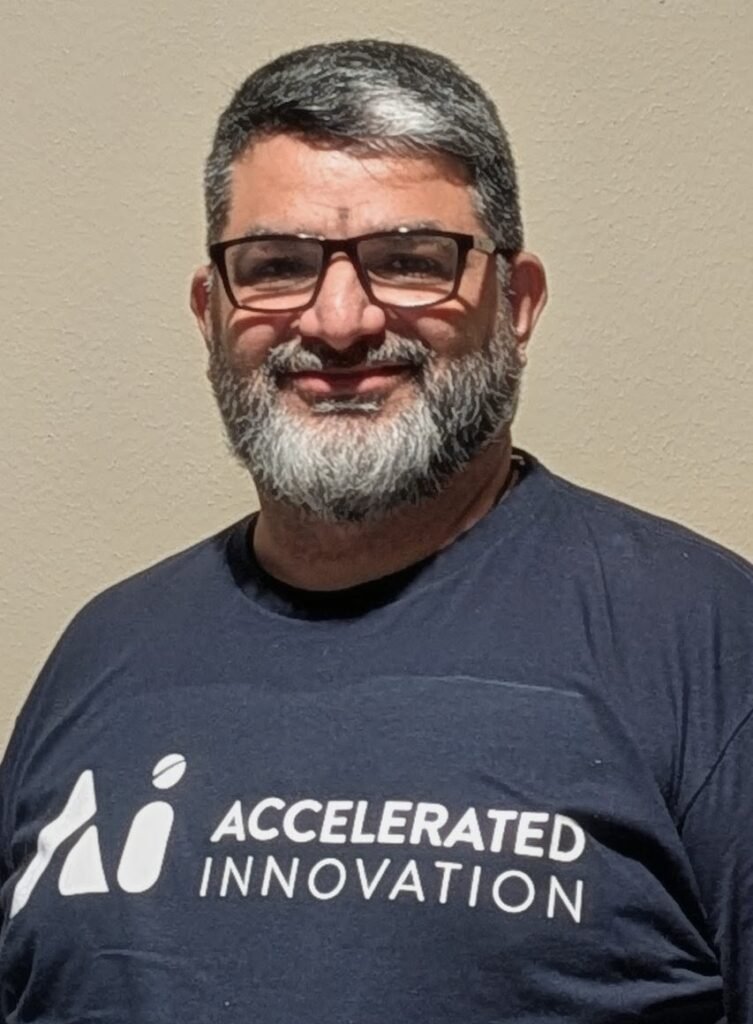
Today, I work as an Enterprise AI Strategist and transformation leader and serve as the founder of eWizTech. Our mission is to help organizations bridge the gap between traditional operations and genuine digital innovation—turning ambition into measurable outcomes.
Our work centers around several connected offerings. The first is AI Strategy and Vision, where I help boards and executives translate their objectives into a clear AI vision, phased Generative AI roadmaps, and responsible adoption patterns. These initiatives are monitored through OKRs and clear value gates, ensuring that AI investments remain connected to measurable business outcomes.
The second is Enterprise Transformation, where I lead change across organizational structure, mindset, and operating models so that strategy, people, and delivery are properly aligned. I believe transformation only creates lasting value when it becomes embedded into the way an organization operates.
What sets my approach apart is that I can move seamlessly between high-level strategy and hands-on execution. Many advisors can provide a strategy deck, but far fewer can also build the agentic AI solutions required to bring that strategy to life. I do both.
Through a fit-for-purpose delivery engine that blends Evaluation-Driven Development with Agile and value-driven practices, we take AI use cases from initial ideas to scaled, working solutions quickly. Our approach is designed to avoid the stalled pilots and unnecessary duplication that can affect many AI programs. We also design and orchestrate low- and no-code agentic AI solutions and run adoption and enablement programs that build AI literacy at every level—from the boardroom to the front line.
A strong example of this approach is Navi, our AI voice-agent platform. Navi handles the early, repetitive stages of client interactions by having natural spoken conversations to capture key client details, needs, and findings, then organizing that information into a clear, structured record the business can act upon.
By reducing hours of manual intake, note-taking, and routine back-and-forth, Navi allows teams to focus their time where it truly matters. For me, it represents a practical example of responsible agentic AI—technology that quietly removes friction while giving people back one of their most valuable resources: time.
Alongside eWizTech, I also lead several ventures that share a common focus on enablement. AI BuildCamp is a project-first program where leaders and teams develop Generative AI expertise by building working prototypes and shipping MVPs. Through OKR Cohort, which I co-founded, I co-authored OKRs Unleashed and helped build a global community that has trained more than 500 practitioners and supported OKR adoption across organizations ranging from 200 to 30,000 people.
I also write FutureFit Leadership, a LinkedIn newsletter focused on practical guidance around AI readiness, change leadership, and Generative AI adoption—giving leaders insights they can apply immediately.
Across everything I do, the promise remains consistent: I do not simply want to deliver AI solutions; I want to leave organizations genuinely capable of winning with AI on their own.
What Are Your Long-Term Goals, and Where Do You Envision Yourself in the Coming Years?
We are at a genuine inflection point. AI is moving rapidly from experimentation into real enterprise capability, yet most organizations simply are not ready for the scale and speed of that transformation. My focus for this next phase is to help leaders close that gap responsibly—building AI literacy at the executive and board level, establishing governance and value gates that make Generative AI adoption safe and sustainable, and creating delivery engines that actually produce results rather than endless proofs of concept.
At the same time, I try to maintain a much longer-term perspective. Today, the conversation is centered on AI, but technology is evolving so quickly that we will soon be navigating AGI, quantum computing, and technologies we cannot yet fully name or anticipate. I do not believe the answer is to chase every new technological wave. The more durable advantage is adaptability—the ability to keep learning, remain curious, and help others navigate change regardless of the technology of the moment.
That is the capability I want to continue building within the leaders and organizations I work with, because adaptability will outlast any individual tool or technology. The goal is to help organizations develop the confidence and capability to keep evolving rather than becoming dependent on any single solution.
On a more personal level, my deepest long-term goal is about giving back. Everything I have been able to build rests on a foundation that others helped provide—my parents, my cousins, and my mentors. I do not take that support for granted. For me, life ultimately comes down to giving back what I have been blessed to receive.
My aspiration is to one day contribute to the Aga Khan Development Network, dedicating my experience and capabilities toward improving the quality of life in the communities it serves. That sense of service is the destination I am quietly working toward, even as I remain focused on the work and responsibilities in front of me today.
Who Has Been the Most Significant Source of Inspiration in Your Life?
My biggest inspiration since childhood has been Imran Khan—not because of any one role he has held, but because of the breadth of what he has accomplished. I grew up watching him as one of the greatest cricketers of his generation, and later watched him become a philanthropist who built institutions dedicated to serving people who had very little.
What inspired me was never a single achievement. It was his versatility and conviction—the idea that one person could excel in completely different arenas and, above all, use that success to give back. That example planted something in me from an early age: aim high, refuse to be defined by a single identity, and measure yourself by what you contribute to others.
At the same time, I have been shaped, perhaps more quietly but just as profoundly, by the people who supported me directly. My parents backed me financially and believed in my choices, while my elder cousins helped guide my direction and provided me with a home and mentorship during my university years in Seattle. I recognize that my journey was made possible in part because people were willing to invest in me.
For me, inspiration is not only about the famous figures we admire. It is also about the people who make our journeys possible. I try to honor both by becoming that kind of support for others—someone who can encourage people to dream bigger, explore beyond conventional boundaries, and ultimately give back through what they build and accomplish.
Please List Some of the Notable Recognitions and Accreditations That You and Your Organization Received.
My professional foundation has deliberately been built at the intersection of technology, strategy, and leadership. Over the years, I have pursued credentials that strengthen not only my technical understanding, but also my ability to translate innovation into meaningful business outcomes.
My academic and professional credentials include:
- MicroMasters in Digital Leadership — Boston University, Questrom School of Business
- MBA in Strategic Management & Sustainability — Manipal GlobalNxt University
- A. in Business Administration, with a focus on Finance & eCommerce Information Systems — Seattle University
- GenAI Certificates in Finance, Marketing & Strategy — Harvard D³ (Digital, Data, Design) Institute
- No-Code AI & Machine Learning — MIT Professional Education
- SAFe Program Consultant (SPC)
- Enterprise Business Agility Strategist & Trainer (EBAS/EBAT)
- Project Management Professional (PMP)
- Brain-Based Coaching — NeuroLeadership Institute
For me, however, some of the most meaningful recognition has come not from credentials, but from the work itself and the trust placed in me by organizations.
I am particularly proud of co-authoring OKRs Unleashed, a book that is now used by organizations around the world to help connect strategy with execution. Contributing to a framework that enables organizations to turn strategic ambition into measurable outcomes is one of the professional accomplishments I value most.
I also consider the trust of clients such as TD Bank, RBC, Rogers, Sun Life, and Walmart Canada a form of recognition in its own right. Being repeatedly invited to participate in an organization’s most important transformation and change initiatives is something I value deeply.
Ultimately, for me, recognition is not simply about the letters after my name or the institutions listed on my résumé. The most meaningful validation is being trusted to help organizations navigate complex change, turn strategy into action, and create lasting impact.
What Were the Most Challenging Obstacles You’ve Encountered in Your Career?
There has never been a completely smooth ride in my career—and I have come to believe that is exactly the point. Looking back, the hardest chapters have shaped me the most.
One of the earliest and most formative challenges was my startup journey. I learned an enormous amount, but making the business work with limited resources was genuinely difficult, and I experienced significant financial pressure during those early stages. There were moments when I questioned whether I had chosen the right path, especially when a safer option had been available.
But that struggle gave me something I would never trade away: resilience and a “pivot in the moment” mindset. I learned how to remain calm, reassess the situation, and change course quickly when reality did not match the original plan. That ability to adapt has continued to serve me throughout my career.
Another recurring challenge has been at the heart of my transformation work: change is difficult because it is ultimately about people, not technology. Introducing new ways of working within a large enterprise means confronting fear, established habits, uncertainty, and skepticism.
I have learned that transformation cannot simply be forced. The new way of working has to become easier and more compelling to choose than the old way—and that requires clarity, trust, and psychological safety. For me, the real measure of successful transformation is when people stop referring to something as “the new initiative” and simply begin to see it as the way they work.
Getting to that point can be slow, deeply human, and sometimes frustrating. But I have also learned that this is where the most durable impact is created.
If I distill everything I have learned into advice—the same advice I give my own son—it would be this: be curious, be humble, and be versatile, with a genuine learning mindset.
The specific tools and technologies we master today will inevitably change. We are talking about AI now, but AGI, quantum computing, and technologies we cannot yet imagine are coming. What will carry us through each of those transitions is not mastery of one particular tool. It is the willingness to keep learning, remain adaptable, and have the humility to keep growing.
That, to me, is how we not only survive the future of work—we help shape it.
A Future Built on Adaptability, Innovation, and Purpose
As AI continues to reshape the way organizations operate, Nizar Khoja stands out for his ability to connect emerging technology with practical business transformation. Through eWizTech, he continues to help organizations move beyond experimentation, turning AI strategy, enterprise agility, and innovation into measurable and sustainable outcomes.
His journey reflects a belief that the future will not be defined by any single technology, but by the ability to learn, adapt, and lead through continuous change. Whether helping enterprises build responsible AI capabilities, enabling leaders through OKRs and Business Agility, or developing agentic solutions that solve real-world challenges, Nizar remains focused on creating impact that lasts.
CEO Scoop Magazine proudly recognizes Nizar Khoja and eWizTech in the special edition, “AI & Digital Transformation Leaders Shaping the Future of Business — 2026,” celebrating his visionary leadership and continued contribution to the future of AI-powered transformation and enterprise innovation.