Tony Molander & Global Impact Ambassadors Are Rewriting the Rules of Responsible Capitalism
Edition – “Top 5 Leaders Transforming Healthcare & Global Impact 2026”
Welcome to this special edition of CEO Scoop Magazine, where we spotlight visionary leaders who are reshaping healthcare through purpose-driven leadership, ethical innovation, and meaningful global impact.
This edition proudly features Tony Sorensen de Rosche, Founder & CEO of Global Impact Ambassadors Ltd, a purpose-driven impact pharmaceutical company built around a powerful philosophy: “People Before Profit | Profit with Purpose.”
Tony’s leadership vision challenges the traditional pharmaceutical model by placing purpose, integrity, ethical innovation, and equitable access to healthcare at the center of business strategy. Under his leadership, Global Impact Ambassadors Ltd is working to create a pharmaceutical organization where commercial success becomes a vehicle for sustainable social impact.
His responsibilities span strategic leadership, research and development, regulatory compliance, international market access, ESG strategy, CSR initiatives, and DEI leadership, with a particular focus on MHRA, EMA, FDA, EU, Middle East, and UK-GMP/GDP standards.
At the heart of this vision is the company’s first flagship product, a next-generation OTC formulation designed to reflect Tony’s commitment to premium quality, safety, responsible innovation, and equitable healthcare access.
What makes Global Impact Ambassadors distinctive is its commitment to reinvesting a majority of profits into CSR, ESG, and philanthropic initiatives. This mission is further protected through a dedicated foundation designed to safeguard the company’s purpose from short-term or purely profit-driven interests.
For Tony, this philosophy is not simply a corporate strategy—it is a lesson shaped by experience. His leadership reflects the belief that businesses have the power and responsibility to create value for shareholders while simultaneously contributing to healthier communities and a more sustainable world.
Through Global Impact Ambassadors Ltd, Tony Sorensen de Rosche is building a model of pharmaceutical leadership where profit supports purpose, innovation serves humanity, and business becomes a force for lasting global impact.
CEO Scoop Magazine proudly welcomes Tony Sorensen de Rosche to the special edition, “Top 5 Leaders Transforming Healthcare & Global Impact 2026,” recognizing his commitment to ethical pharmaceutical innovation, purpose-driven leadership, sustainable healthcare, and meaningful global impact.
Please share the beginning of your career journey with us.
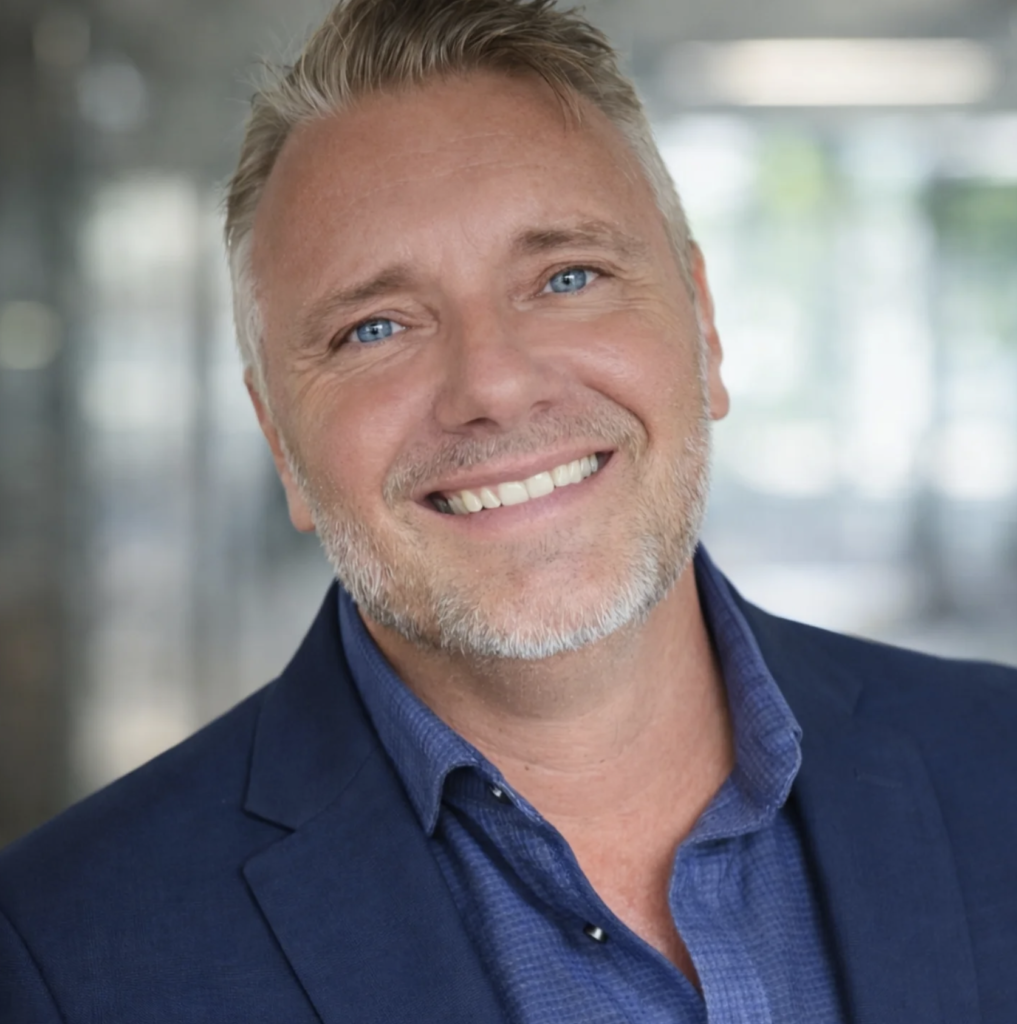
My journey began in medical school, following a troubled youth, but looking back, I realize that my path was never really about medicine, pharmaceuticals, or business alone. At its heart, it has always been about compassion for other people and gradually understanding what truly matters when the things once believed to be permanent can suddenly be taken away.
As my career evolved, I moved beyond the clinical perspective and into the broader Life Sciences industry. For more than a decade, I have worked across pharmaceuticals, regulation, commercialisation, and responsible business, eventually taking the step into entrepreneurship myself.
That decision was driven by something I had increasingly struggled with: I did not like or agree with aspects of what I was seeing within the Life Sciences industry. Rather than simply accepting those realities, I felt compelled to understand them more deeply—and ultimately to become part of the change I wanted to see.
This journey gave me an unusual perspective on healthcare and Life Sciences. I learned to understand both sides of the equation: the human being who needs treatment and the enormous commercial ecosystem required to develop, manufacture, regulate, and deliver that treatment.
I also developed an enormous respect for the pharmaceutical industry. Modern medicine has transformed humanity. It saves millions of lives and gives millions more a quality of life that previous generations could scarcely have imagined.
But that respect also led me to ask some uncomfortable questions.
When did you begin questioning the way the pharmaceutical industry operates?
I began asking myself how an industry created to improve human health could reach a point where financial performance sometimes appeared more important than the person at the end of the supply chain.
Why should doing what is right for society be treated as a cost rather than an investment? Why have purpose and profitability come to be viewed as opposing forces?
At first, these were professional questions. But over time, they became deeply personal.
Those questions ultimately lit my fire, strengthened my drive, and gave me a clear sense of purpose: to challenge the status quo and help create a pharmaceutical industry where commercial success and genuine human impact can exist together.
You mentioned that these questions eventually became deeply personal. What happened?
My own journey has included success, but it has also included periods when life seemed to dismantle almost everything around me. I have experienced serious professional adversity, profound personal setbacks, and the worst kind of betrayal. There were circumstances that forced me to rebuild when walking away—or even ending my life out of despair—might have felt considerably easier.
On top of that, I was a single father raising two girls while fighting cancer, often trying to put a smile on my face when, inside, I was crying.
There are moments in life that divide everything into “before” and “after.”
When you are confronted with tremendous hardship, titles and material possessions suddenly become remarkably unimportant. Revenue becomes just a number. Status becomes noise. You begin to think about what will remain when you are no longer in the room.
For me, a righteous legacy became everything.
Being a father had already changed my understanding of responsibility long before cancer entered my life. But facing mortality gave that responsibility an entirely different urgency.
It made me look beyond what I could achieve and ask myself what I could leave behind—what my life, my choices, and my work could ultimately mean to the people who come after me.
And one question began to stay with me, a question that continues to guide me to this day:
How did becoming a father and later facing your own mortality change your definition of success?
I found myself asking a question that continues to shape everything I do:
If my daughters one day look at what I spent my life building, will they simply see that their father was successful? More importantly, will they understand—and cherish—what success actually is and what it truly means?
That question fundamentally changed my definition of entrepreneurship.
I began to understand that success could not simply be measured by revenue, status, recognition, or what I accumulated. It had to be measured by the impact I created, the people I helped, and the legacy I left behind.
I wanted to build the first pharmaceutical company in the world truly dedicated to impact—a company where doing good for society was not treated as a cost of doing business, but as the very reason for doing business.
That thinking ultimately became Global Impact Ambassadors and the philosophy I describe as “Profit with Purpose.”
For me, it represents a different way of thinking about business: proving that commercial success and meaningful human impact do not have to compete with one another. They can—and should—work together.
So how did those experiences turn into the idea behind Global Impact Ambassadors?
The principle behind Global Impact Ambassadors is deliberately simple: commercial success and societal good should reinforce one another, rather than compete with one another.
I began imagining a world where corporate social responsibility is not something added to a business after the fact, but something embedded within its very core. Somebody had to show the way.
That became the foundation of the business model.
The idea is that purpose can sit inside the commercial model itself—from the way active ingredients are sourced and products are manufactured and supplied, to environmental responsibility, accessibility, and ultimately, how the economic value created by the company is shared with society.
I do not believe profit is something we should apologise for. Businesses need to be profitable. Profit creates jobs, funds innovation, attracts investment, and gives organisations the ability to grow and create even greater impact.
The real question is: what do we choose to do with the power that profitability gives us?
For too long, business has often been driven by the pursuit of more—more revenue, more growth, more wealth—without always asking what that growth ultimately contributes to society.
Haven’t we had enough of the endless greed?
I believe it is time to demonstrate that business can be commercially successful while remaining deeply committed to people, society, and the world we share. That is the thinking behind Global Impact Ambassadors—and the essence of Profit with Purpose.
Could you highlight the key offerings?
Global Impact Ambassadors was created around a deceptively simple question:
What if doing right by people was not something companies did only after making a profit, or at the expense of their majority shareholders? What if doing right by people was built into the business itself?
We are an Impact company first and foremost.
We develop and commercialise pharmaceutical products with the same expectations of quality, regulatory compliance, safety, and commercial performance as any serious international pharmaceutical company. But around that conventional foundation, I have redesigned the philosophy of the business to try to live by a moral high ground that many might consider a fantasy or even a utopia.
I have deliberately constructed the company with the standard operating procedures needed to protect its ethics, purpose, and commitment at all costs—while never compromising on our ambition to deliver the highest-standard premium medicines possible.
In 2025, we signed a major global commercial contract with a partner generating roughly USD 60 billion in turnover. What makes that partnership particularly meaningful to me is that our partner shares our vision of using business as a force for making the world a better place.
But our commitment goes far beyond simply allocating a portion of profits to good causes.
We are taking sustainability to the next level by embedding strict regulation, responsibility, and accountability throughout the entire supply chain. We have critical key performance indicators across the journey—from sourcing and manufacturing through to the end consumer—so that our principles are not simply words on paper.
Integrity, transparency, responsibility, and purpose have to be measurable and operational.
That is what we are building at Global Impact Ambassadors: a pharmaceutical business where commercial excellence and meaningful impact are designed to work together from the very beginning.
How do you actually build those values into a company rather than simply talk about them?
To achieve that, I knew I had to work backwards from traditional pharma.
I had seen first-hand how challenging transformational processes can be within larger organisations. I knew that trying to change an established company from the inside could be incredibly difficult. So, instead of starting with an existing structure and attempting to transform it later, I decided to build the business from the beginning around a specific and bold set of values, ethics, and measurable KPIs.
Everything we do is embedded in that core belief. I want everyone who works with me to understand not only what we are trying to achieve, but why we are doing it. Their “why” has to be crystal clear.
For me, purpose cannot be something that sits on a presentation slide or appears in a corporate statement. It has to influence the way decisions are made, the way people work, and the standards we hold ourselves accountable to.
One of my ambitions has also been to build the company around all 17 United Nations Sustainable Development Goals, rather than selecting the easiest two or three and then simply calling ourselves sustainable.
That approach creates a much higher standard of accountability.
I want sustainability and impact to be woven into the architecture of the business—not added afterwards as a marketing exercise. If we are serious about building a different kind of pharmaceutical company, then our values have to be present in the decisions we make every day, from the beginning to the end of the business journey.
And where does the consumer fit into this model?
I never wanted Global Impact Ambassadors to decide on behalf of people what they should care about.
Instead, I wanted to give them a genuine voice.
Through the technical structure I have designed, consumers will be able to help direct the impact created by their purchase toward causes that matter most to them—whether that is children, education, healthcare, humanitarian relief, women’s empowerment, animal welfare, scientific advancement, or protecting our planet.
For me, that changes the relationship between a business and the people it serves.
I want Global Impact Ambassadors to prove—commercially, transparently, and at scale—that putting people and purpose at the centre of executive decision-making does not weaken a business.
Make no mistake about it—it makes it stronger.
Think about it. If someone is offered two healthcare products of the same premium quality, and one of those products allows part of the value created by that purchase to help another human being, protect the environment, or create opportunities for a child, why wouldn’t they choose the more righteous option?
That is where the real power lies.
Purpose creates consumer preference.
Consumer preference creates commercial value.
Commercial value creates greater impact.
And greater impact gives people an even stronger reason to choose that product again.
To me, that is the circle of global well-being.
Even explaining it now brings tears to my eyes because this is not just a business model—it is deeply personal.
So when people ask me what Global Impact Ambassadors offers, the simplest answer is pharmaceuticals.
But that is not really what I am building.
I am building proof that business can heal more than bodies—it can strengthen communities, protect our planet, and leave behind a legacy that outlives every balance sheet.
We are changing the world and just happen to work in pharma.
That is how I see Global Impact Ambassadors.
The more people who get on board—consumers, partners, and everyone who believes in what we are trying to achieve—the more useful we can become to the person next to us and to the world around us.
Sometimes people in the business ask me, “Why would you give so much back?”
My answer is always very simple:
“Why wouldn’t I?”
What are your long-term goals, and where do you envision yourself in the coming years?
My ambition is not to build the biggest pharmaceutical company in the world. In fact, I believe size can often become part of the problem when it comes to margins, flexibility, and decision-making.
I do not want to become part of the finite thinking that says a business must simply keep growing bigger and bigger. To me, that way of thinking is old and out of date.
I want the core purpose of what we do to guide us, and I believe growth will come naturally from that.
If Global Impact Ambassadors becomes commercially successful while remaining completely uncompromising in its purpose, I will have demonstrated something far more important than the success of one company.
We will have demonstrated that there is another way of doing business.
I want Profit with Purpose to become a commercially proven model that other businesses can look at, challenge, adopt, copy, and—hopefully—improve upon.
Imagine what happens if one company proves that consumers actively prefer businesses that share economic value with society, operate responsibly throughout their supply chains, and allow people to participate in creating measurable impact.
Then imagine ten companies doing it.
Then imagine that model becoming the starting point for every new business and every new entrepreneur.
Just imagine.
At that point, we are no longer talking about corporate social responsibility.
We are talking about a fundamental change in the way business itself is designed.
We are talking about changing the expectations of what responsible capitalism looks like.
In the coming years, I want Global Impact Ambassadors to grow internationally and demonstrate that our model can work across different markets, cultures, and healthcare systems.
I want us to launch products that people genuinely want and need, while building partnerships with organisations that share our values and believe in the same vision.
But ultimately, I want to prove something bigger: that purpose can survive scale.
Growth should never require us to compromise the principles that created the business in the first place. If we can expand internationally, remain commercially successful, and stay uncompromising in our commitment to purpose, responsibility, and impact, then we will have demonstrated that responsible capitalism is not simply an ideal—it can be a practical and commercially sustainable reality.
And what does success look like for you personally?
I do not measure my future or my success by the position I hold or the size of the company I lead.
In fact, I am even creating a foundation to govern my shares personally. I would rather see the ethos of the business survive beyond generations than have people fighting for control in the future.
I want the people who eventually govern that foundation to sit around the boardroom table asking questions that truly matter:
How many people did we help?
How many children received an opportunity they otherwise might never have had?
How many people received support because somebody, somewhere, simply chose one healthcare product instead of another?
And perhaps most importantly:
Did we influence anyone else to do the same?
There is an old way of measuring success by what you accumulate.
I have become much more interested in measuring it by what you leave behind.
One day, I hope my daughters, Ariel and Bianca Molander, can look at Global Impact Ambassadors and understand that it was never really about pharmaceuticals.
It was about proving that compassion can be powerful, integrity can be commercially successful, and business can be an extraordinary instrument for improving people’s lives.
If, years from now, Global Impact Ambassadors has helped move even a small part of global business in that direction, then I will consider my life’s work worthwhile.
Because ultimately, my greatest measure of success will not be what I built for myself.
It will be what continues to help others long after I am no longer there to see it.
Who has been the most significant source of inspiration in your life?
Without hesitation, my daughters, Ariel and Bianca.
They probably do not realise it, but they have influenced almost every important decision I have made.
Watching the horror unfold in the world in recent years has only strengthened my determination to turn my vision into reality—even to a level that some people might call madness. But that is simply who I am. I am relentless. I enforce what I believe in, and I do not allow anything or anyone to stand in my way.
I believe we need to stand straight and look into the eyes of our children, knowing that they will be okay because of what we chose to leave behind.
Our children today are different from us in many ways—and, I believe, they are better. They have a remarkable ability to strip away the unnecessary complexity that adults create around life.
They do not initially measure people by titles, wealth, status, or the size of their company. They look at what you do, how you treat people, whether you keep your promises, and whether you are there when they need you.
Being my children’s keeper has made me question myself more deeply than any boardroom ever could.
I have made mistakes. I have taken risks. I have succeeded and failed more times than I can count. There have been moments when I have felt incredibly strong and others when life has brought me to my knees.
But nothing—nothing—keeps me down.
I tell my daughters every day that integrity matters. That we should care about people who have less than we do. That money is not the definition of success. And that we should always stand up for what we believe is right.
In many ways, Global Impact Ambassadors is part of the answer I want to give them.
It is my way of showing them that the values I speak about—compassion, integrity, courage, responsibility, and purpose—can be more than words.
They can become the foundation of what we build and, ultimately, the legacy we leave behind.
What is the most important thing you hope your daughters learn from watching you?
I want them to grow up knowing that you do not have to choose between ambition and kindness.
You can be commercially ambitious without allowing money to become your moral compass. You can succeed without needing somebody else to lose. And when you have the ability to help another person, doing so should not be considered extraordinary.
It should be normal.
My daughters also remind me that our decisions extend far beyond our own lifetime. The businesses we build, the resources we consume, the environment we leave behind, and the values we normalise today will eventually become somebody else’s inheritance.
Their inheritance.
Children, being children, eventually stop listening to what you say and start looking at what you do.
That is why I cannot simply tell my daughters what I believe. I have to live it.
And so should you.
Please list some of the notable recognitions and accreditations that you and your organization have received.
Recognition has never been the reason I do what I do, and, to be honest, I feel somewhat uncomfortable talking about it. If recognition ever becomes the reason, I believe you have already lost sight of the purpose.
That said, I am deeply grateful that my work, ideas, and leadership have been recognised internationally. Every platform creates another opportunity to challenge the way people think about business, healthcare, sustainability, and responsibility.
Over the years, my work and voice have taken me to international platforms, conferences, and discussions spanning healthcare, sustainability, impact, and responsible business.
I have had the privilege of contributing to conversations connected with the United Nations General Assembly and COP28, as well as international impact-investing forums and discussions involving regulators and leaders across the Life Sciences industry.
I have also been fortunate to appear on several international podcasts, with some of the largest platforms still to come. For me, these opportunities are valuable not simply because of the recognition they bring, but because they allow me to share a different perspective and continue challenging conventional thinking.
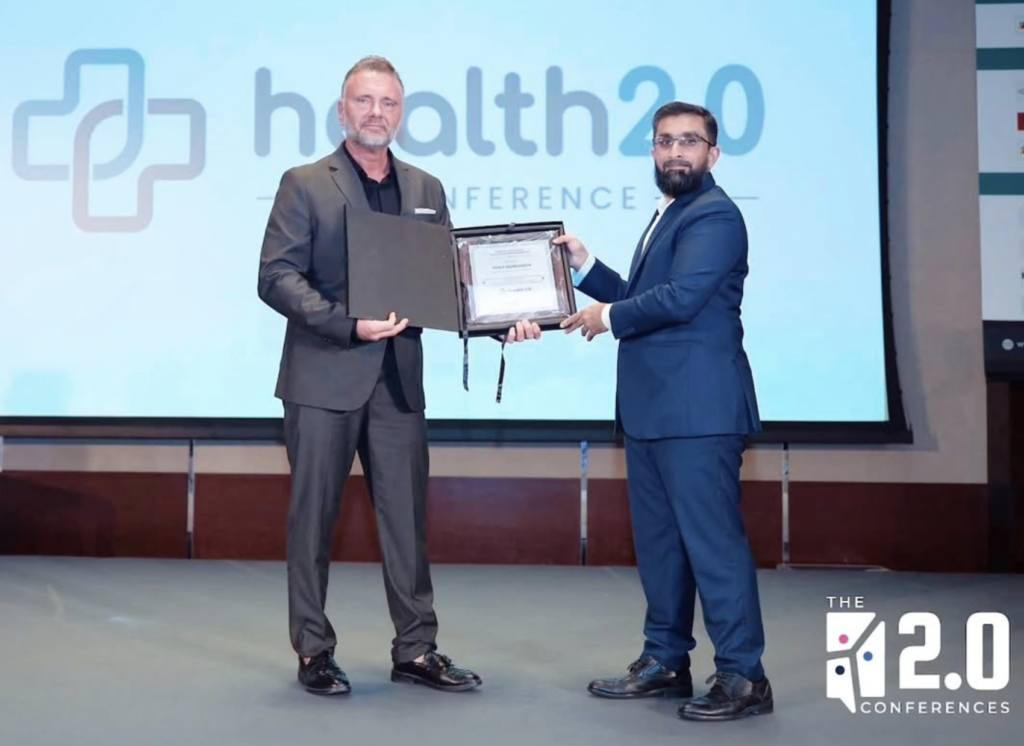
One recognition that I am particularly grateful for was the Outstanding Leadership Award at Health 2.0 in Dubai in 2024, recognising my leadership within healthcare.
I also have several further recognitions expected over the next two quarters.
Ultimately, I see every award, platform, and recognition as an opportunity rather than an endpoint. The recognition matters far less than what I can do with the platform it creates.
Of all that attention, what actually means the most to you?
Perhaps more important to me than any individual recognition is being invited into rooms where the future of our industry is being discussed.
In 2026, I have been invited to speak at CPHI, bringing the Profit with Purpose philosophy directly into one of the world’s most important pharmaceutical industry environments.
For me, that matters.
It is relatively easy to speak about changing an industry from the outside.
It is certainly more challenging doing it from the inside. [laughs]
Global Impact Ambassadors is still at the beginning of its journey, so I am careful not to confuse ambition with achievement. Ultimately, the company should be judged by what it actually delivers—the quality of its products, the integrity of its operations, the impact it creates, and whether the commercial model we are building proves itself at scale.
Awards are wonderful things to receive.
But ultimately, I do not want a wall covered in certificates telling me that we made an impact.
I want the impact itself to be the evidence.
What were the most challenging obstacles you have encountered in your career?
How much time do we have? [laughs]
I could give you the conventional entrepreneurial answer: raising capital, navigating regulation, building companies, finding the right people, and challenging established ways of doing things.
But those have not really been my greatest obstacles. They have been more like speed bumps.
Life has been the real challenge.
I have experienced betrayal from people I trusted, professional situations that took years of work away from me, periods of enormous uncertainty, and moments when I genuinely did not know how I was going to rebuild what had been lost. There were even moments when I questioned whether my soul was more suited for “the other side.”
There is something very different about experiencing fear when you have children.
You are no longer frightened only for yourself. You start thinking about who will protect them, guide them, make them laugh, and tell them everything is going to be okay if one day you are no longer there to do it yourself.
Sometimes you smile because they need to see you smile.
And then you close the door and deal with whatever is happening inside you.
I do not romanticise hardship. I do not believe suffering automatically makes somebody stronger. Sometimes suffering simply hurts.
There have been moments when I have been exhausted, angry, and completely lost. There have been moments when giving up would have felt considerably easier than finding another reason to stand up.
But somehow, I stood up.
Again. And again. And again.
Eventually, I realised something: resilience is not about never falling apart.
It is about what you decide to do after you have.
Some of the experiences I once wished had never happened to me ultimately forced me to confront questions I might otherwise have spent my entire life avoiding.
Who am I when the title disappears?
Who am I when the money disappears?
Who am I when people disappoint me?
Who am I when my own body reminds me that none of this lasts forever?
And what am I going to do with whatever time I have left?
Those questions changed me.
They made me less interested in appearing successful and much more interested in being useful.
They made me less afraid of challenging powerful systems.
And, strangely, some of the things that hurt me most also strengthened the very compassion on which I built Global Impact Ambassadors.
How have you stopped those experiences from making you cynical?
I cannot control everything that happens to me.
But I can control whether it makes me cruel.
Whether it makes me cynical.
Whether I allow my pain to become someone else’s pain.
I refuse to do that.
So, when people ask me about the greatest obstacles in my career, I do not think first about business. I think about the moments when life gave me every reason to become a different person—and the decision, sometimes made one day at a time, not to let it.
I have learned that what happens to us does not have to define who we become.
I can acknowledge the pain without allowing it to harden me. I can remember the betrayal without becoming incapable of trust. I can experience loss without losing compassion.
That choice is not always easy. But it is a choice I continue to make.
I am still here. And I still believe people are fundamentally worth fighting for.
Editor’s Note
Tony Molander is challenging the traditional boundaries of pharmaceutical business by proving that profit and purpose can work together. Through Global Impact Ambassadors, his vision of Profit with Purpose places people, integrity, and measurable impact at the heart of commercial success—offering a bold new perspective on what responsible capitalism can achieve.
Also Read: