
Manish Chaturvedi: Building the Future of Finance Through Trust, Strategy and Intelligent Capital
Edition: Visionaries of Intelligent Capital, Strategic Leadership & Financial Excellence – 2026
In a financial world shaped by rapid market movements, shifting investor sentiment, and constant uncertainty, Manish Chaturvedi has built his career around a different philosophy: discipline over impulse, foresight over reaction, and long-term value over short-term visibility.
As the Founder & Managing Director of Indus Strategy Financial Advisors Pvt. Ltd., Manish brings more than two decades of experience across bond markets, structured finance, investment banking, corporate advisory, wealth management, principal investing, and strategic capital allocation. His journey has given him a perspective that goes beyond transactions and balance sheets. For him, finance is ultimately about people, trust, responsibility, and the intelligent stewardship of capital.
From Financial Discipline to Strategic Thinking
Manish’s professional foundation was built through his Chartered Accountancy training, which strengthened his understanding of financial discipline, governance, risk evaluation, compliance, and analytical decision-making. His later executive learning and leadership exposure through premier institutions broadened that foundation, introducing him to the complexities of strategy, organizational development, decision-making, and institution-building.
Yet some of his most valuable lessons came from the market itself.
His early career exposed him to complex mandates and brought him into contact with promoters, institutions, lenders, investors, and advisers across different market cycles. These experiences helped him understand not only financial structures, but also the psychology of entrepreneurs, the aspirations of families and institutions, and the responsibility attached to managing capital.
As he puts it:
“Leadership at scale requires both precision and judgment. Formal education gave me the former; real markets taught me the latter.”
That combination of technical knowledge and practical judgment became an important foundation for his leadership philosophy.
A Career Driven by Curiosity and Purpose
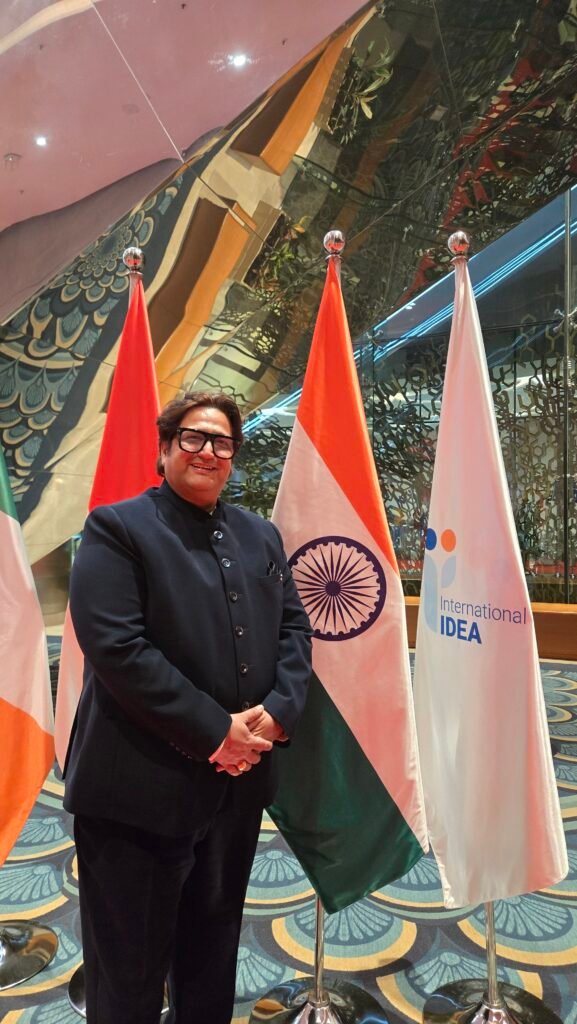
Manish’s decision to build a career in finance was shaped by curiosity, passion, resilience, and a fascination with the relationship between capital and enterprise value. Over more than two decades, he has worked across multiple areas of finance, gaining a broad understanding of how capital can influence businesses, institutions, and long-term growth. Those experiences eventually led to the creation of Indus Strategy Financial Advisors, envisioned as a platform combining intellectual rigour, global connectivity, relationship depth, and bespoke execution.
What began as an advisory-focused institution gradually developed into a broader capital platform, bringing together curated corporate finance solutions with wealth and asset-management capabilities. For Manish, leadership within such an institution is best described through one word: Steward.
A steward, in his view, protects trust, develops people, allocates capital responsibly, and creates institutions capable of lasting beyond individual personalities.
“Leadership is not merely about visibility or personal success; it is about creating systems, culture, confidence, and legacy.”
The Values Behind the Institution
Manish’s leadership philosophy combines ambition with responsibility and independent thinking with deeply rooted values. His thinking has been influenced by ideas from Jim Collins’ Good to Great and Simon Sinek’s philosophy of beginning with “why.” However, he considers his family, mentors, clients, and market experiences equally important in shaping his approach.
His family taught him humility, responsibility, and perseverance. Mentors reinforced the importance of discipline, judgment, and reputation. Clients taught him to listen carefully, solve problems practically, and honor trust.
The markets provided perhaps the most direct education of all. According to Manish, markets are “brutally honest.” They reward discipline, punish arrogance, and remind even experienced participants that certainty is never guaranteed. This has led him to emphasize four principles: stay grounded, think independently, respect market cycles, and protect reputation above all else. For him, credibility is a form of capital that compounds over time and that is the intangible asset what he has built for Indus Strategy.
Creating Indus Strategy
The idea behind Indus Strategy emerged from Manish’s observation of a gap in the advisory landscape. He believed there was an opportunity to build a financial institution that could combine strategic insight, global relationships, sophisticated structuring, and genuine alignment of interests. The firm was therefore established with the ambition of creating an Indian-origin financial institution operating with global standards and offering highly curated capital solutions.
Initially, its focus was transaction advisory—supporting clients with capital raising, acquisitions, restructuring opportunities, and strategic value creation. As the business developed, Manish’s perspective expanded. He recognized that creating value is not limited to completing transactions. It also requires understanding how capital should be managed across different market environments.
Today, Indus Strategy combines boutique investment-banking capabilities with modern wealth and asset-management ambitions, while seeking opportunities to connect global investors with India-linked growth.
Building Credibility Through Consistency
Building a financial institution in a relationship-driven industry presented significant challenges for Indus
One of the earliest was establishing credibility alongside larger, long-established competitors. Manish chose to address this not through aggressive promotion, but through consistent delivery, confidentiality, integrity, and intelligent execution. Market cycles created another test. Periods of optimism could be followed by sharp contractions, challenging both business models and leadership temperament. The response was to remain conservative in risk, selective in mandates, transparent in conduct, and uncompromising about reputation. Over time, this approach helped trust become an important source of momentum for the organization.
A Curated Approach to Finance
Indus Strategy deliberately avoids positioning itself as a volume-driven intermediary. Instead, it operates around the concept of a curated financial house. In advisory, the firm focuses on transactions where strategic thinking, bespoke structuring, and senior-level involvement can materially contribute to outcomes. In asset management, its focus includes newer investment models centered on capital preservation, intelligent risk-taking, and the ambition to generate returns across market cycles.
Manish also places emphasis on research, macroeconomic interpretation, sector intelligence, and technology-enabled analytics. Its commitments to NCDEX and NERL, according to Manish, reflected this philosophy—identifying market-infrastructure opportunities and supporting them with disciplined conviction.
Preparing for the Next Chapter
The next phase of Indus Strategy is focused on strengthening its asset-management capabilities and expanding cross-border private-capital opportunities. Indus is developing strategies for investors seeking global sophistication while maintaining disciplined downside awareness. It also sees opportunities to connect international capital with India’s emerging growth sectors.
Indus Strategy is preparing to enter wealth management and advisory services in a more structured manner and is working toward formally launching AIF platforms in India. Regulatory, product, research, talent, and distribution architecture are being strengthened as part of this process. Technology and research infrastructure are also becoming increasingly important as the organization works toward more data-informed, scalable, and adaptive investment processes. The ambition is to evolve from a respected boutique advisor into a globally relevant capital platform.
Innovation Through Better Thinking
For Manish, innovation is not simply about introducing something new. It is about applying better thinking to produce better outcomes. Within Indus Strategy, this philosophy appears through data-led decision-making, continuous learning, new analytical frameworks, macro intelligence, sector research, and quantitative screening.
The organization seeks to reassess opportunities dynamically as market conditions change rather than relying exclusively on static assumptions. For Manish, innovation ultimately matters only when it contributes to better judgment, stronger resilience, and improved client outcomes.
Calm. Demanding. Visionary. Accountable.
Manish’s responsibilities extend across strategic direction, capital-allocation philosophy, client and investor relationships, talent development, and maintaining the culture of excellence within the organization. He describes his leadership style in four words:
“Calm. Demanding. Visionary. Accountable.”
The combination reflects his belief that leaders must create confidence externally while maintaining demanding standards internally.
“They must be optimistic enough to build, disciplined enough to protect, and accountable enough to take responsibility for outcomes.”
The Importance of Balance
Despite the intensity of financial markets, Manish believes sustained performance requires personal balance. He prioritizes disciplined routines, physical wellness, reading, reflection, and meaningful family time. He also believes that stepping away from constant activity creates the space necessary for deeper thinking.
“Many strategic breakthroughs occur not in meetings, but in moments of calm reflection.”
For him, professional effectiveness and inner balance are closely connected.
A Long-Term View of Leadership
One of the greatest challenges facing modern leaders, according to Manish, is short sightedness. The pressure to prioritize visibility over substance is accompanied by geopolitical uncertainty, technological disruption, rapidly changing capital flows, and evolving stakeholder expectations.
Leaders must therefore balance ambition with governance, growth with prudence, innovation with execution discipline, and speed with sustainability.
His message is clear:
“The future will favour those who can build trusted institutions, not just fast-growing enterprises. Scale without governance is fragile; growth without trust is temporary.”
For emerging leaders, his advice is equally direct:
“ Think big, think long term and the approach should be institutional rather than transactional.”
Also Read:
- Tony Molander & Global Impact Ambassadors Are Rewriting the Rules of Responsible Capitalism
- Veni Reddy: Driving Industrial Innovation, Engineering Excellence & Sustainable Growth
- Torie Smith, Dr. h.c. of Torie Smith LLC®
- Dr. Tessa Meyer: Advancing Cosmetic Surgery Through Surgical Excellence, Compassion, and Resilience
- Dr. Umesh Pandit, CEO of AtiSunya Private Limited