
A Life of Courage, Consciousness, and Change
In a world where ideas shape societies and perspectives define progress, few voices have consistently challenged conventional thinking while inspiring meaningful change. Janet Levine—author, human rights activist, public speaker, and entrepreneur—stands as one of those rare individuals whose work transcends disciplines and generations.
With a career spanning decades across writing, education, activism, and public discourse, Levine has built more than a body of work—she has created a platform for transformation. Her work is rooted in a powerful belief: that individuals can reshape their understanding of themselves and the world through deeper awareness, critical thinking, and intellectual exploration.
From her early days as a young journalist in South Africa, publishing in national newspapers during one of the country’s most turbulent political eras, to her role as a global educator and author, Levine has consistently engage
d with complex social, political, and psychological realities. Rather than accepting established narratives, she has challenged them—using her voice to provoke thought, shift perspectives, and open new ways of seeing.
Through her books, teaching, and public engagement, she has explored themes that go beyond surface understanding—delving into human consciousness, morality, identity, and the structures that shape society. Her work does not simply inform; it invites reflection and transformation.
At the core of her journey lies a commitment not just to storytelling, but to truth—building a legacy where writing becomes a tool for awareness, education becomes a pathway for growth, and ideas become catalysts for change.
A Life of Writing, Activism, and Intellectual Inquiry
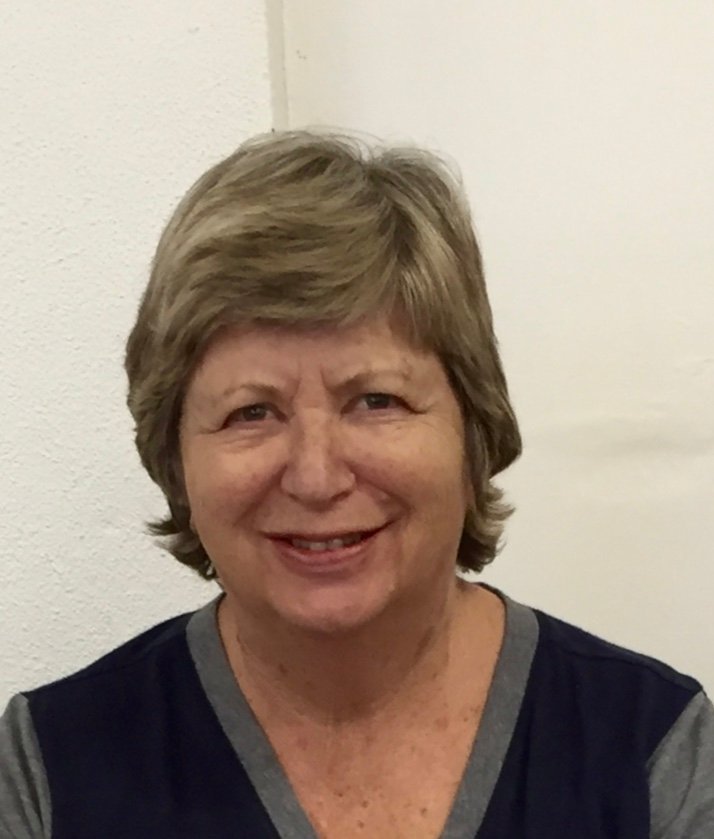
For Janet Levine, the foundation of her career was never confined to a single role—it was defined by a continuous exploration of truth, human rights, and the power of ideas.
From an early age, she was drawn to both writing and activism. As a teenager, she was already politically active, engaging in anti-apartheid youth movements, attending rallies, and contributing to grassroots efforts in underserved communities. At just eighteen, she began her journey in journalism, publishing in the Rand Daily Mail, one of South Africa’s most credible anti-apartheid newspapers.
This early exposure to political realities shaped not only her career, but her worldview.
Her work as a journalist evolved into a broader platform of influence. She became the first white journalist to write a weekly column in The Sowetan, a black-run newspaper serving the vast township communities of South Africa—an achievement that reflected both courage and commitment to inclusive dialogue during a deeply divided era.
Over time, Levine expanded her influence into literature and education, becoming the author of six traditionally published and widely recognized books, including Inside Apartheid and Liv’s Secrets. Her writing has consistently explored the intersections of politics, psychology, spirituality, and human experience.
Alongside her writing career, she dedicated nearly three decades (1986–2014) to teaching at Milton Academy in Massachusetts, where she taught philosophy and literature. Her role as an educator extended globally, as she conducted workshops and presentations on personality psychology, using the E-model to help individuals better understand themselves and others.
Throughout her journey, Levine has remained deeply engaged in public life—from serving on the Johannesburg City Council to founding and leading nonprofit organizations in both South Africa and the United States.
Her career reflects a consistent pattern: not following established paths, but redefining them.
Please share the beginning of your career journey with us.
My career journey has always been rooted in a fundamental belief in human rights and the power of ideas to shape both individual lives and society as a whole.
From a very young age, I was actively involved in political and social issues in South Africa. As a teenager, I participated in anti-apartheid youth movements, attended rallies, and worked in underserved township communities. This early exposure to inequality and injustice shaped both my worldview and my commitment to speaking truth through my work.
By the age of eighteen, I had already begun my career as a journalist, publishing in the Rand Daily Mail, one of the only credible anti-apartheid newspapers in South Africa at the time. Journalism became my first platform—not just for reporting, but for engaging with complex political realities and giving voice to perspectives that were often marginalized.
Over time, my work expanded beyond journalism into authorship, education, and public engagement. I became the first white journalist to write a weekly column in The Sowetan, a black-run newspaper serving the township communities—an experience that reinforced my commitment to inclusive dialogue and cross-cultural understanding during a deeply divided period.
Alongside my writing, I became deeply involved in public life, eventually serving on the Johannesburg City Council, where I engaged with national and international stakeholders, including journalists and diplomatic communities. This role provided a broader platform to understand governance, policy, and the global dimensions of human rights.
My career later evolved into education and authorship in the United States, where I taught philosophy and literature for nearly three decades at Milton Academy, while continuing to write books that explore political realities, human psychology, and spiritual inquiry.
Throughout every stage of my journey, the common thread has remained the same: a commitment to truth, to questioning established perspectives, and to helping others see the world—and themselves—more clearly.
Could you highlight the key offerings?
A decade into my career, I became the first white journalist to write a weekly column in The Sowetan, a black-run newspaper serving the vast township communities of Soweto and surrounding areas. This was not just a professional milestone—it was a significant moment in a deeply divided society, where engaging across racial and political boundaries required both conviction and courage. My work during this time focused on bringing visibility to the realities of apartheid and contributing to a broader, more inclusive public discourse.
At the age of twenty-eight, while married and raising two young children, I was elected to the Johannesburg City Council, becoming the youngest person ever to hold that position. This role allowed me to move from commentary to direct involvement in governance, where I engaged with policy, civic responsibility, and the complexities of political leadership during a critical period in South Africa’s history.
My book Inside Apartheid, which became a bestseller and is now considered a significant work in South African historical studies, further extended this impact. Through this work, I provided international audiences with a deeper and more nuanced understanding of the realities of apartheid, going beyond headlines to explore the human, political, and moral dimensions of the system.
These experiences—journalism, public service, and authorship—represent the core of my work: engaging with truth, challenging systems, and contributing to meaningful societal understanding and change.
Books and Intellectual Contributions
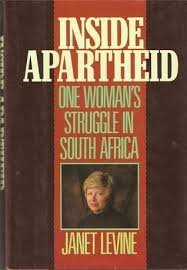
Janet Levine’s body of work reflects decades of intellectual exploration, political engagement, and a deep commitment to understanding both society and the human condition. Each of her books is not simply a publication, but a contribution to how individuals think, perceive, and engage with the world.
Her landmark work, Inside Apartheid, published in 1988 by Contemporary Books and now under McGraw-Hill, became a bestseller and remains a classic in South African historical studies. Through this book, Levine deepened the understanding of generations of non-South Africans, offering a clear and unfiltered view of the realities of apartheid—its structures, its human cost, and its moral implications. The book continues to stand as an essential reference for those seeking to understand this defining period in history.
In 1999, Bloomsbury Publishing (USA) released The Enneagram Intelligences, followed by Know Your Parenting Personality in 2008, published by John Wiley. At a time when the Enneagram model had not yet achieved widespread global recognition, Levine was among the early pioneers writing about its applications. These works—one focused on educators and the other on parenting—demonstrated how personality frameworks could be used as tools for growth, awareness, and more effective human relationships. She also lectured internationally on this model, extending its reach and practical relevance.
Her 2010 work, Leela’s Gift, marked a shift into spiritual exploration. Set in India, the book draws from over 25 years of engagement with Buddhist practices, meditation, and extended time spent in India and Nepal. It opens pathways into deeper, often unexplored dimensions of consciousness, offering perspectives that move beyond a purely Western, secular understanding of reality. A revised second edition, The Awakening of Diya Sharma, is currently in development.
In 2021, Armin Lear Press published Reading Matters: How Literature Influences Life, a work that examines how literature shapes thought, perception, and consciousness. Through detailed analysis of significant literary texts, Levine demonstrates how reading can fundamentally alter the way individuals think and engage with the world—an idea that has gained increasing relevance in recent years.
Her most recent novel, Liv’s Secrets (2023), also published by Armin Lear Press, is a historical fiction and family saga centered on the immigrant Weisz family across generations (1880–2010). Through the character of Liv Weisz, the novel explores morality, identity, and the human cost of resistance during the apartheid era. As readership continues to grow, the book stands as a powerful narrative that bears witness to the dehumanizing realities of apartheid while also offering a deeply personal and emotional perspective.
Across all her works, a consistent theme emerges: a commitment to truth, depth, and transformation. Whether addressing political history, psychological frameworks, spirituality, or fiction, Janet Levine’s writing challenges readers not only to understand the world—but to rethink it.
What are your long-term goals, and where do you envision yourself in the coming years?
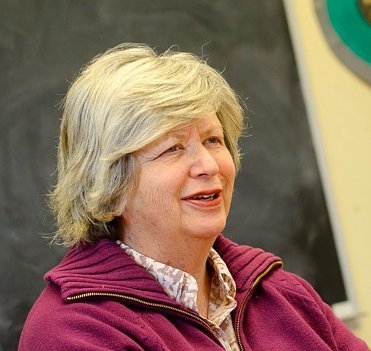
I envisage more of the same. My work has always been rooted in writing, teaching, and sharing knowledge in its many forms, and that continues to be my focus.
I currently have two books in progress—one an autobiography, the other a novel—which will keep me engaged for the coming years. Writing has always been central to my life, not just as a profession, but as a way of thinking, exploring, and communicating ideas.
Mine has always been a writing and teaching life, in all aspects of teaching and sharing. There is no real point in changing direction now, particularly when I feel there is still much, much more to say and to contribute.
Who has been the most significant source of inspiration in your life?
The authors of the great books I have continued to read and return to over the years have been my most significant source of inspiration. Literature has always been central to my life, both academically and personally.
I hold a post-graduate degree in Literature, and reading has never been a passive activity for me—it has been a way of thinking, questioning, and expanding my understanding of the world. The ideas, voices, and perspectives found in books continue to shape how I see both human nature and society.
Reading and books remain an ongoing source of inspiration, constantly offering new insights and deeper layers of understanding.
Please list some of the notable recognitions and accreditations that you and your organization have received.
There are too many to list comprehensively, and I would suggest beginning with my Wikipedia page for a broader overview of my work and recognitions.
My book Inside Apartheid became a bestseller and continues to be recognized as an important contribution to South African historical studies, widely read and referenced for its insight into the realities of apartheid.
More recently, my novel Liv’s Secrets has been nominated for the 2023 National Book Award, further reflecting the continued relevance and impact of my writing.
In addition to my published works, my content has reached wider audiences through various media platforms, including serialized video adaptations, book trailers, podcasts, and creative productions such as music video work.
I have also been featured on the Spotlight Television Network with Logan Crawford, and my work has achieved multiple #1 rankings on Google News, reflecting both visibility and engagement across digital platforms.
Overall, the recognition I have received reflects not only the reach of my work, but its ongoing engagement with readers, audiences, and important social and intellectual themes.
What were the most challenging obstacles you’ve encountered in your career?
One of the most persistent challenges has been how long everything takes to happen. Meaningful work—whether writing, publishing, or building ideas—requires time, patience, and sustained commitment, often far beyond what people expect.
More recently, I have also experienced the reality of being scammed by highly sophisticated individuals. Scamming is widespread, and authors in particular are especially vulnerable to it. It is an unfortunate but very real part of operating in today’s environment.
These challenges, while different in nature, reflect the broader realities of a long career—where persistence, awareness, and resilience are essential.
Closing Perspective
Janet Levine’s work stands as a reflection of a life dedicated not to convenience, but to truth, inquiry, and transformation. Across decades of writing, teaching, and public engagement, she has consistently challenged accepted narratives and encouraged deeper ways of thinking about both the individual and society.
Her journey does not follow a conventional arc of success—it is instead defined by persistence, intellectual curiosity, and a willingness to engage with complexity. Whether addressing the realities of apartheid, exploring the structures of personality, or examining the influence of literature on consciousness, her work invites readers to look beyond surface understanding and question what they believe to be fixed.
At a time when information is abundant but depth is often lacking, Levine’s voice remains grounded in substance. She continues to write, to think, and to share—not to conform to expectations, but to contribute meaningfully to ongoing conversations about human experience.
Ultimately, her work reflects a simple but enduring truth: that through reflection, awareness, and the courage to question, individuals have the capacity to expand their understanding—and, in doing so, reshape both their inner world and the world around them.