
Sreekanth Gopi, Founder of NeuroHeart.AI: Shaping the Future of Generative AI & Human-Centered Innovation
Edition – Visionary Leaders in Generative AI & Enterprise Innovation — 2026
As Generative AI moves rapidly from experimentation into real-world enterprise applications, innovators who can combine technical expertise, strategic thinking, and human-centered innovation are becoming increasingly important. Sreekanth Gopi stands at this intersection, bringing a deep passion for Generative AI, Prompt Engineering, enterprise innovation, and the development of technologies designed to create meaningful impact.
Currently serving as Senior Principal Consultant – Prompt Engineer at a leading Investment Bank, Sreekanth specializes in Generative AI, Large Language Model (LLM) optimization, Prompt Engineering, and scalable enterprise solutions. With more than a decade of experience spanning data science, project management, and cross-functional leadership, he focuses on designing AI systems that address real-world challenges, enhance user experiences, and unlock new possibilities for organizations.
Educated in Artificial Intelligence in the United States, he views AI as far more than an automation technology. To him, it is an accessible intellectual companion that can help ordinary people ask deeper questions, explore ideas, understand emotions, and develop greater self-awareness. His perspective brings together AI, psychology, mindfulness, human wellness, and philosophical inquiry, with a strong focus on making complex knowledge easier to access and apply. He is particularly interested in how AI can support people in understanding their own thought patterns, expanding awareness, and using technology not simply for productivity, but for meaningful personal and human development.
His entrepreneurial vision is reflected through NeuroHeart.AI, which he founded to explore the intersection of artificial intelligence, emotional wellbeing, and personalized human experiences. The platform features a pioneering chatbot capable of delivering live vocal meditations with music, real-time HRV insights, and emotional support. By bringing together AI-driven personalization, wearables, and rPPG technology, Sreekanth is exploring innovative ways technology can help individuals manage stress and enhance wellbeing.
His entrepreneurial vision also extends into music and cultural preservation. Through a growing body of research, Sreekanth has explored AI-driven Indian raga generation, including fine-tuning MusicGen for raga melodies and developing agentic AI systems that analyze emotion, select appropriate ragas, tune compositions, and verify musical grammar. His mission is to make the complexity of traditional raga music more accessible while preserving its authenticity. In collaboration with leading music partners, including legendary artists, he is developing a 360-song vocal and instrumental training corpus across 12 ragas for the upcoming RagaGen platform. The platform is envisioned for musicians, filmmakers, advertisers, and personalized wellbeing experiences, where emotionally aligned raga music can support meditation and positive emotional states.
Beyond his professional responsibilities, Sreekanth is actively contributing to the broader AI and research ecosystem. His research has been presented at FIE, AIMC, IEEE, ICNMC, and ASEE conferences, while his work and perspectives have appeared in leading media outlets including USA Today, Forbes, Neuworldz, InfoWorld, and The New Stack. He has also participated in AI-focused podcasts covering Prompt Engineering, AI meditation, music generation, and innovative approaches to global peace.
Sreekanth is equally committed to nurturing the next generation of innovators. He serves as a mentor and judge for global hackathons and innovation initiatives, for state universities like GSU and KSU. He also contributes to the research community as a reviewer and moderator for IEEE FIE Conferences and the International Symposium on Internet of Sounds.
His contributions have earned recognition including the Global Pioneer in Generative AI & Enterprise Innovation Award 2026, Top Prompt Engineer and Innovator in AI, and Global Top 30 Trailblazer 2025, alongside notable visibility through USA Today and Times Square billboards
As a member of Sigma Xi, Marquis Who’s Who, and INFORMS, Sreekanth continues to combine enterprise expertise, research, entrepreneurship, mentorship, and technological creativity. His journey reflects a clear ambition: to move beyond simply adopting artificial intelligence and actively contribute to shaping how AI can serve organizations, individuals, and society.
CEO Scoop Magazine proudly features Sreekanth Gopi in the special edition, “Visionary Leaders in Generative AI & Enterprise Innovation — 2026,” recognizing his pioneering contributions to Generative AI, Prompt Engineering, enterprise innovation, and human-centered technology.
Please Share the Beginning of Your Career Journey With Us.
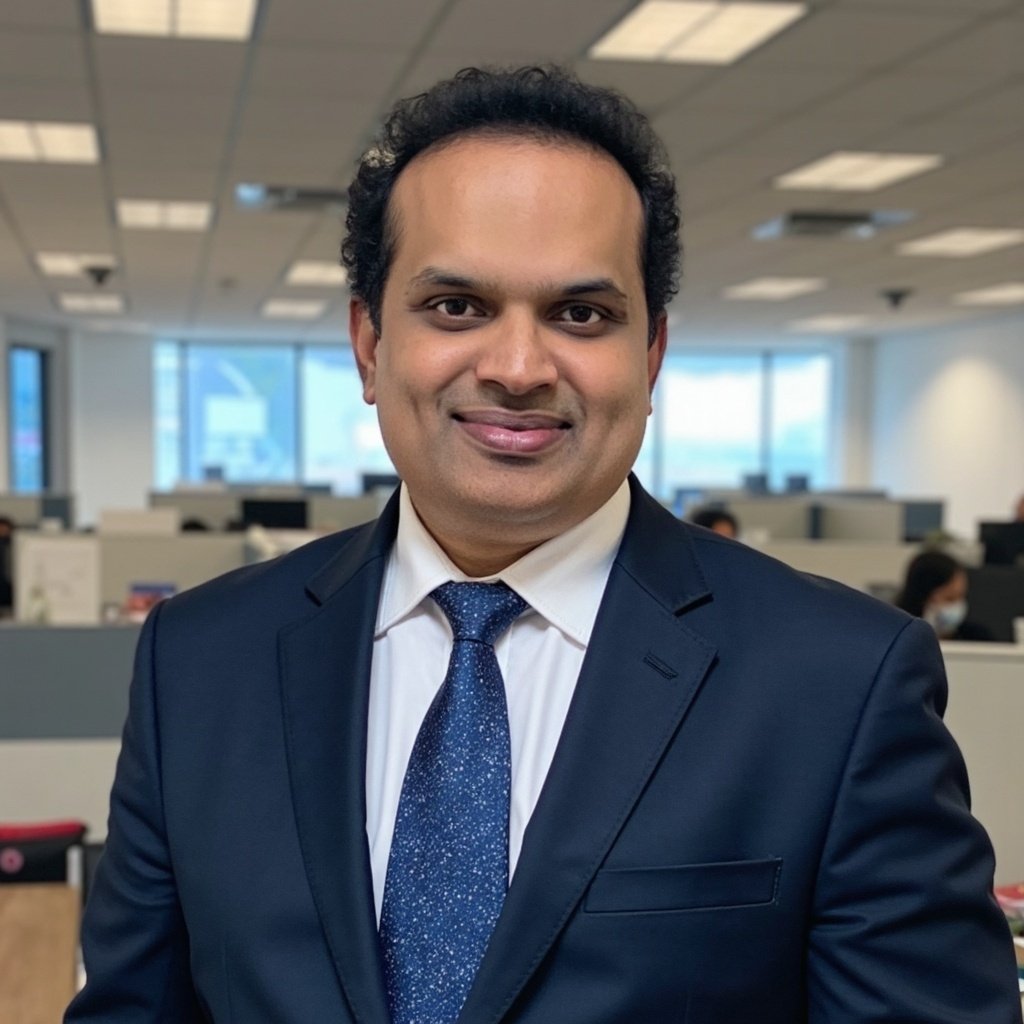
My career has not followed a straight line, and I have come to see that as one of my greatest advantages. I began my academic journey in Mechanical Engineering at Karunya Institute of Technology and Sciences in Coimbatore, where I learned to think in systems, understanding the forces at work, identifying root causes, designing within constraints, and verifying whether a solution actually works.
I later pursued an MBA in Information Technology and Entrepreneurship from EDHEC Business School in France, which added an important commercial perspective to my technical foundation. It taught me to think not only about how technology works, but also about how it creates value, how teams scale, and how ideas can become sustainable organizations.
For more than fifteen years, my career has operated at the intersection of engineering, technology, analytics, commercial strategy, project leadership, and international delivery. Building on that foundation, I completed an M.S. in Computer Science at Kennesaw State University, specializing in Artificial Intelligence. My thesis focused on classification of attention deficiency in students and stress management using special meditations, while my broader research expanded into measuring the impact of meditation using heart-rate variability. Together, these multidisciplinary investigations became an important research foundation for NeuroHeart.AI.
Extensive business travel across Japan, France, Germany, UK, China, Dubai, and the United States profoundly shaped how I approach leadership and innovation. That global exposure taught me to bridge technology, business, regulation, and human needs, an ability that later became essential in building AI systems designed for real-world adoption. That global operating experience later became invaluable in AI, where the model itself is only one component of a much larger human and organizational system.
Music has remained a parallel passion throughout my journey. I often begin with a melody inspired by a particular lyric, emotion, or raga, then develop it into a complete composition and collaborate with professional singers and musicians to bring it to life. Over the years, this passion has grown from personal composition into performance, research, and community building. Most recently, I was selected through an audition to perform live in Atlanta with legendary Indian playback singer Mano, whose career spans almost 35,000 recordings. His appreciation and encouragement made the experience especially meaningful. To add another melody to this journey, I also founded Music Cafe band in Atlanta, bringing together singers and musicians for performances across the Atlanta metropolitan area.
Today, these experiences converge in the work I am building across enterprise AI and NeuroHeart.AI. Whether I am designing production-grade generative AI systems, exploring personalized wellbeing through biosignals and meditation, or extending that research into generative music, the underlying goal remains the same: to combine technology, evidence, creativity, and human understanding in ways that solve real problems and create meaningful impact.
Could You Highlight the Key Offerings of NeuroHeart.AI?
NeuroHeart.AI is my principal venture and the clearest expression of my human-centered approach to AI. I am developing it as an adaptive wellness platform that brings together conversational intelligence, physiological signals, meditation, breathing practices, and personalized music to create experiences that respond to the individual rather than deliver the same content to everyone.
At its core, NeuroHeart.AI is designed to understand a user’s stated goal and wellness context, identify the appropriate capability, responsibly use available measurements, and guide the individual toward a meaningful next step. The emphasis is on understanding personal patterns rather than making universal judgments, for growth and success.
NeuroHeart.AI uses summarized wellness metrics to help users reflect on stress and recovery, personalize meditation or breathing sessions, and learn from completed practices. Importantly, it is designed as a wellness and self-reflection product—not a medical device, diagnostic service, therapy provider, or replacement for professional care.
What Are Your Long-Term Goals, and Where Do You Envision Yourself in the Coming Years?
My long-term vision is for AI to evolve from a tool that simply answers questions into a trusted system that helps people better understand themselves, make informed choices, and improve their wellbeing. I believe the next major frontier of AI will not be defined only by greater computational intelligence, but by how effectively that intelligence can understand human context, emotion, physiology, and individual needs.
Through NeuroHeart.AI, I envision building an adaptive wellness platform that can serve millions of people by bringing together conversational AI, wearable signals, meditation, breathing practices, and personalized recommendations. Rather than offering the same content to everyone, the platform should learn from each individual’s patterns and continuously adapt the experience in ways that are meaningful and measurable.
Music is a central medium through which I hope to manifest this vision because it can transcend divisions of religion, culture, language, and identity. Yet truly personalized music remains difficult to create at scale. My vision is to use AI to generate raga-based music tailored to an individual’s emotional state and wellbeing while preserving the depth, discipline, and expressive quality associated with great musical traditions. The goal is not simply to automate composition, but to make purposeful, emotionally responsive music available to far more people and to study its impact through measurable signals such as HRV and brain activity.
Ultimately, I hope to use music as a shared language that brings together maestros, filmmakers, scientists, spiritual leaders, technologists, and other changemakers on one platform. By connecting these worlds through AI and music, I envision creating experiences that cross traditional boundaries and help people move toward greater wellbeing, understanding, and human connection.
Who Has Been the Most Significant Source of Inspiration in Your Life?
The most significant source of inspiration in my life is my Guru, H.H. Mahant Swami Maharaj. His influence extends far beyond moments of formal spiritual practice; it shapes the way I approach life, responsibility, ambition, and service every day.
His extraordinary compassion, humility, and selfless love have given me inner strength during difficult periods and continually expanded my understanding of what is possible. Through his guidance and grace, I have learned to move beyond my personal limitations, remain grounded as my responsibilities grow, and view success as an opportunity to uplift others.
What inspires me most is the quiet power of his example. He leads through genuine personal care, recognizes the dignity and potential in every individual, and transforms lives without seeking recognition. His example continually reminds me that meaningful leadership is not measured only by what we accomplish ourselves, but by the confidence, hope, and possibilities we awaken in others.
That principle is deeply reflected in the kind of technology, organizations, and solutions I aspire to build—innovations that not only create value, but ultimately help people grow, flourish, and realize their own potential.
Please List Some of the Notable Recognitions and Accreditations That You and Your Organization Received.
The recognitions I value most are those that connect technical contribution with broader human impact. For me, recognition is meaningful when it reflects not only what I have built or achieved, but also the potential of that work to advance innovation, research, and opportunities for others.
This year, I was recognized as a Global Pioneer in Generative AI & Enterprise Innovation for 2026. In 2025, I was named among the Top 30 Global Trailblazers and Top 50 Leaders to Follow, featured on a Times Square billboard in New York, and selected by the International Association of Top Professionals (IAOTP) as a Top Prompt Engineer and Innovator in AI. I am also proud to have been invited to deliver the September 2026 AI Connect Expo keynote, “From Prompts to Agents: How AI Is Moving from Answers to Action,” at the Georgia World Congress Center in Atlanta, while continuing to serve as a mentor, judge, reviewer, moderator, and speaker across AI, startup, hackathon, and academic communities.
This year also brought a meaningful recognition of my journey as a singer. After training in Carnatic and Hindustani music, composing more than 50 songs, and performing across India, Dubai, and the United States, I was selected through an audition to receive mentoring from and perform live in Atlanta with legendary Indian playback singer Mano, whose career spans nearly 35,000 recordings. Singing alongside him before a live audience, and receiving his appreciation and encouragement, was a deeply memorable milestone in my musical journey. I also founded Music Cafe, a multilingual musical band in Atlanta that performs across cultural and language platforms, reaching audiences of nearly 5,000 across different programs, with one performance reel approaching 100,000 views. Together, these experiences have strengthened the connection between my work as a singer, composer, community performer, and AI-music researcher.
If there is one future I want to help create, it is one in which intelligence, music, science, and human awareness are no longer separate worlds. I hope to build platforms that bring these disciplines together and place their benefits within reach of ordinary people, so that technology ultimately becomes not just more intelligent, but more meaningful in the way it serves human life.
What Were the Most Challenging Obstacles You Have Encountered in Your Career?
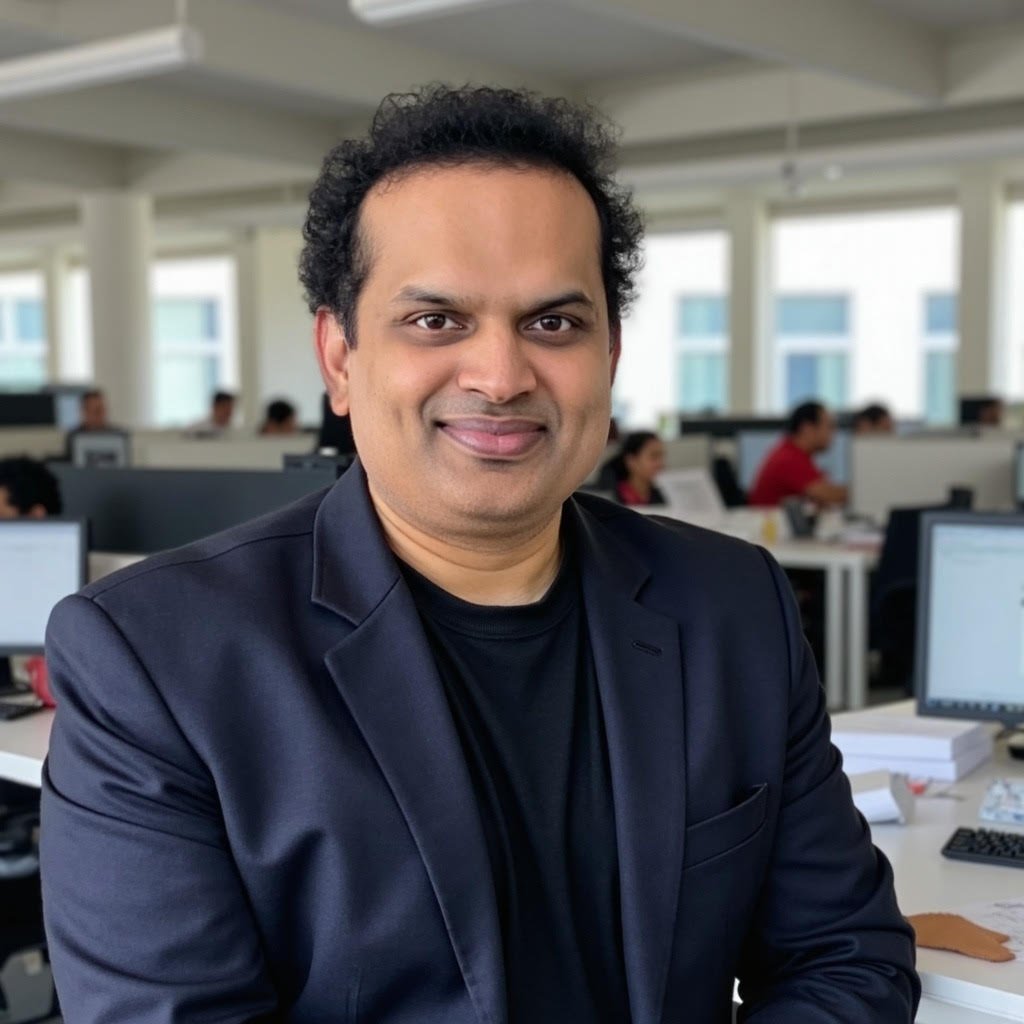
The hardest challenge I have encountered throughout my career has been learning to translate across worlds that often speak very different languages: engineering, business, research, regulation, wellness, and human behavior. I have learned that even the most technically elegant model can fail if the underlying data is weak, the latency is unacceptable, the results cannot be properly audited, or the people using it do not trust it. That experience taught me to treat adoption, governance, and operations as fundamental parts of the architecture, rather than considerations that come afterward.
Another challenge has been navigating an interdisciplinary career that does not always fit neatly into a conventional professional label. My journey has moved from mechanical engineering to business, computer science, music, biosignals, and agentic AI. From the outside, that can appear fragmented. I have learned not to reduce my journey simply to fit a conventional definition.
Building production AI systems within a regulated enterprise environment has reinforced that lesson. These systems must address far more than simply generating an impressive response. They need to account for security, access control, prompt injection, factual accuracy, privacy, cost, evaluation, and failure recovery. Improving retrieval relevance or reducing latency has often required persistent experimentation across prompts, search configuration, reranking, context packaging, orchestration, caching, and observability. Much of this work is less glamorous than an impressive demonstration, but I have learned that this is where dependable, real-world value is actually created.
The entrepreneurial side of my journey has presented its own challenges. Building NeuroHeart.AI required me to bring together academic research, Apple Watch data, iOS and watchOS development, AI personalization, privacy controls, product design, and user communication, all while continuing my enterprise responsibilities. Having limited time and resources forced me to prioritize carefully, but it also gave me a greater sense of discipline and focus.
Music has presented a very different kind of challenge. Creating high-quality original music is inherently collaborative, requiring lyricists, composers, instrumentalists, singers, sound engineers, arrangers, and production teams, along with significant time and financial investment. The challenge becomes even greater when building AI systems for raga music, because meaningful model training requires a sufficiently large, carefully produced corpus that preserves both musical grammar and artistic quality. This has made one question especially important to me: how can we scale the knowledge and craftsmanship of experienced musicians without reducing music to mass-produced output? Addressing that challenge has become a central part of my research and the vision behind RagaGen.
Instead, I see the integration as my advantage. Engineering gives me rigor, business gives me scale, AI gives me adaptive capability, music gives me emotional structure, and spiritual practice keeps my purpose anchored in service. Together, these experiences have shaped the way I approach innovation and have taught me that the most meaningful solutions often emerge when seemingly different disciplines are brought together with intention.
Selected Public References
For readers who would like to explore my work, research, professional journey, and the organizations I have built or contributed to, I have included a selection of public resources below:
- AI — Explore the platform, its human-centered AI approach, and my work as its founder. NeuroHeart.AI
- SwiftAIApps — Learn more about the AI engineering team supporting my work in agentic AI and intelligent software solutions. SwiftAIApps
- LinkedIn — My professional profile, experience, research interests, and ongoing work in Generative AI and enterprise innovation. Sreekanth Gopi on LinkedIn
- IAOTP Recognition — Public announcement of my selection as Top Prompt Engineer and Innovator in AI for 2025. IAOTP Recognition Announcement
- Kennesaw State University Thesis — My research on CM-II, EEG spectral analysis, and HRV. Kennesaw State University Research Repository
- Transatlantic AI Hackathon — Information related to the 2023 competition where our StitchSense team received the Grand Prize. Transatlantic AI Hackathon
- AI Connect Expo — My 2026 keynote speaker profile for “From Prompts to Agents: How AI Is Moving from Answers to Action.” AI Connect Expo Speaker Profile
These references provide readers with opportunities to explore the research, products, professional contributions, recognitions, and AI innovation behind my journey in greater depth.