


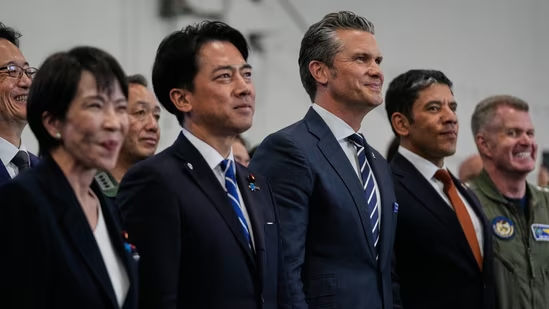
WASHINGTON (AP) — The United States military has carried out a series of lethal air and naval strikes against four boats allegedly transporting drugs in the eastern Pacific Ocean, killing 14 people and leaving one survivor, U.S. Defense Secretary Pete Hegseth announced Tuesday.
It marks the deadliest day yet in Washington’s rapidly intensifying campaign against maritime drug trafficking in Latin America.
Escalation in a Two-Month Campaign
According to a senior Pentagon official who spoke on condition of anonymity, the coordinated strikes were conducted Monday off the coast of Colombia as part of a two-month operation that has seen the U.S. military expand its footprint in the region.
Officials say the campaign is aimed at dismantling long-standing narcotics networks that move cocaine and fentanyl precursors northward — but the increasing tempo and secrecy of the strikes have alarmed allies and fueled speculation that Washington’s true objective is to pressure Venezuelan President Nicolás Maduro.
The strikes are the first time multiple boats were hit in a single day, signaling a more aggressive phase in the campaign that began in early September.
U.S. surveillance spotted one survivor clinging to debris after an explosion, and the military relayed coordinates to both the U.S. Coast Guard and a Mexican military aircraft in the area, the Pentagon official said.
Confusion Over Strike Location
While Washington described the operation as occurring near Colombia, the Mexican Navy reported its search teams were operating 400 miles southwest of Acapulco, raising questions about where the attacks actually took place.
The Pentagon declined to provide further details on coordinates or participating aircraft.
The discrepancy underscores growing regional unease over the campaign’s transparency.
Mexico confirmed it was still conducting a search-and-rescue mission Tuesday for the lone survivor.
Mexico Voices Sharp Objection
Mexican President Claudia Sheinbaum said she had ordered her foreign ministry and navy to meet with the U.S. ambassador to demand explanations.
Her remarks reflect a widening diplomatic rift between the two neighbors, whose cooperation has long been crucial in the fight against cross-border drug smuggling.
Analysts warn that U.S. unilateral actions risk undermining trust with Mexico at a time when regional coordination is vital to curb cartel activity.
Tensions With Colombia and Venezuela
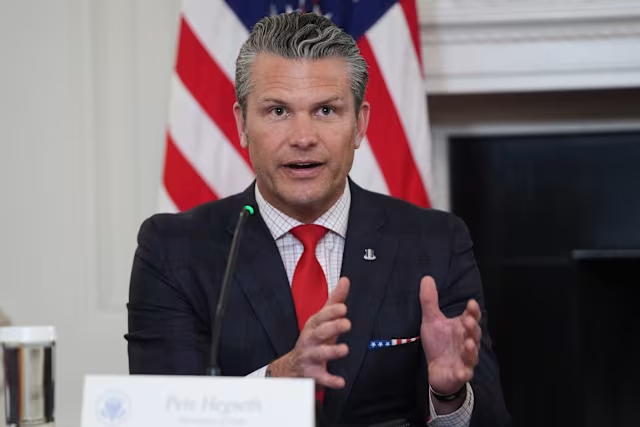
The backlash isn’t limited to Mexico. Relations with Colombia, historically Washington’s most dependable counter-narcotics partner, have also soured.
Last week, the Trump administration imposed sanctions on Colombian President Gustavo Petro, his family, and a senior aide, accusing them of involvement in the drug trade — allegations Petro called “baseless and politically motivated.”
Meanwhile, in Venezuela, President Nicolás Maduro denounced the operation as an act of “aggression.”
He accused the U.S. of “fabricating a war” under the pretext of drug interdiction, pointing to the recent deployment of an aircraft carrier, eight warships, and thousands of troops to the region.
Footage of Strikes Shared Online
Defense Secretary Hegseth released video clips of the attacks on social media, showing boats loaded with bundles speeding through open waters before suddenly erupting into fireballs after precision strikes.
A separate video appeared to show two stationary boats sitting side by side before both exploded, with two visible crew members moments earlier.
The footage, viewed millions of times online, reignited debate over the legality and morality of Washington’s “war-on-cartels” strategy, which critics argue mirrors post-9/11 counterterrorism tactics.
Rising Death Toll and Expanding Military Role
Monday’s attack brings the total death toll from 13 confirmed U.S. strikes in the Pacific and Caribbean to at least 57 fatalities.
The U.S. has linked many of the operations to the Tren de Aragua, a Venezuelan criminal group recently designated a foreign terrorist organization.
Secretary of State Marco Rubio said the strikes are part of a lawful counterdrug mission and accused Maduro’s government of “complicity in narcotics trafficking.”
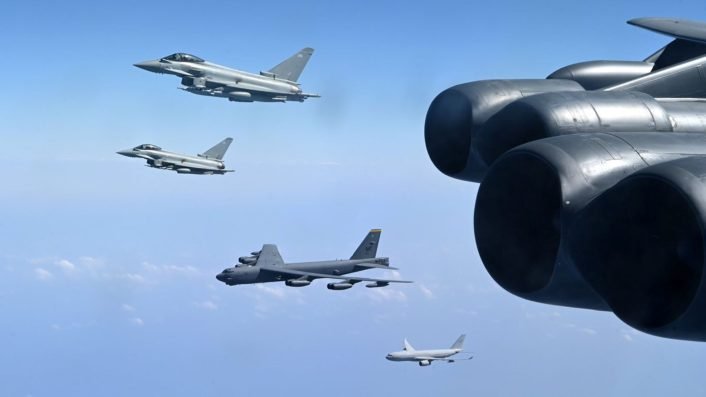
The Pentagon has also confirmed that B-52 bombers recently conducted a show-of-force flight near Venezuela’s coast.
Legal Questions and Human Rights Concerns
International law experts and human rights groups have urged the U.S. to release evidence linking the destroyed boats to drug trafficking.
So far, the administration has offered no public proof of the vessels’ cargo or the identities of those killed.
Critics argue that classifying alleged traffickers as “unlawful combatants” — a term drawn from post-9/11 legal doctrine — risks transforming law-enforcement operations into warfare, bypassing judicial oversight.
They warn the campaign could set a precedent for extraterritorial killings without due process.
The Trump administration, however, maintains that the operations are fully legal under U.S. and international statutes authorizing action against groups engaged in transnational organized crime.
Officials describe the campaign as essential to stopping the flow of fentanyl, cocaine, and methamphetamine precursors that have fueled America’s overdose crisis.
Diplomatic Fallout and Regional Repercussions
The mounting civilian death toll, conflicting reports on strike locations, and widening rift with Latin American governments have complicated Washington’s decades-long counter-narcotics agenda.
Observers say the campaign, initially launched to choke off cartel supply chains, now risks destabilizing regional alliances and stoking anti-U.S. sentiment.
Latin American leaders are expected to raise the issue at next month’s Organization of American States (OAS) summit, where Mexico and Colombia plan to propose new transparency protocols for multinational drug-interdiction missions.
A War With Uncertain Boundaries
For now, details about the sole survivor’s condition remain unclear, and neither Mexico nor the U.S. has disclosed where the person will be taken.
What is clear is that the United States has entered a new, more aggressive phase of its maritime campaign — one that blurs the lines between counter-narcotics and warfare.
As the Pentagon continues to describe the strikes as necessary to protect American lives, Latin American officials warn that without restraint and coordination, the region could soon face a larger geopolitical confrontation born from a war on drugs that no one fully controls.