


THE ARCHITECT OF THE INTELLIGENT WEB: How Andrea Tortella is Redefining the Advertising Industry
Edition – leading the charge: top leaders to watch in 2026 – Vol 1
In competitive sailing, there is a skill sailors call “reading the wind.” It is the ability to detect subtle shifts in conditions before they fully emerge. A slight movement in the water, a change in pressure across the sails, a pattern forming on the horizon — these signals allow elite sailors to anticipate what others only notice once it is too late.
For Andrea Tortella, former Captain of the Monaco National Sailing Team, this principle became far more than an athletic skill. It evolved into a philosophy — one that now shapes how he approaches leadership, innovation, and the future of the digital economy.
Today, Tortella has exchanged the waters of the Mediterranean for one of the most complex arenas in modern technology: the global advertising ecosystem. As CEO and Co-Founder of Thrad, he leads a company delivering millions of advertisements daily to Fortune 500 brands, while attempting something the industry has struggled with for over a decade — creating advertising that is intelligent, privacy-conscious, and genuinely valuable for users.
Working alongside co-founder Marco Visentin, an artificial intelligence researcher who left his PhD at Imperial College London to pursue this vision, Tortella is helping redefine how the internet itself is monetized.
Their mission is ambitious: build the infrastructure that powers the next generation of the open web.
The Monaco Discipline: A Foundation of Leadership
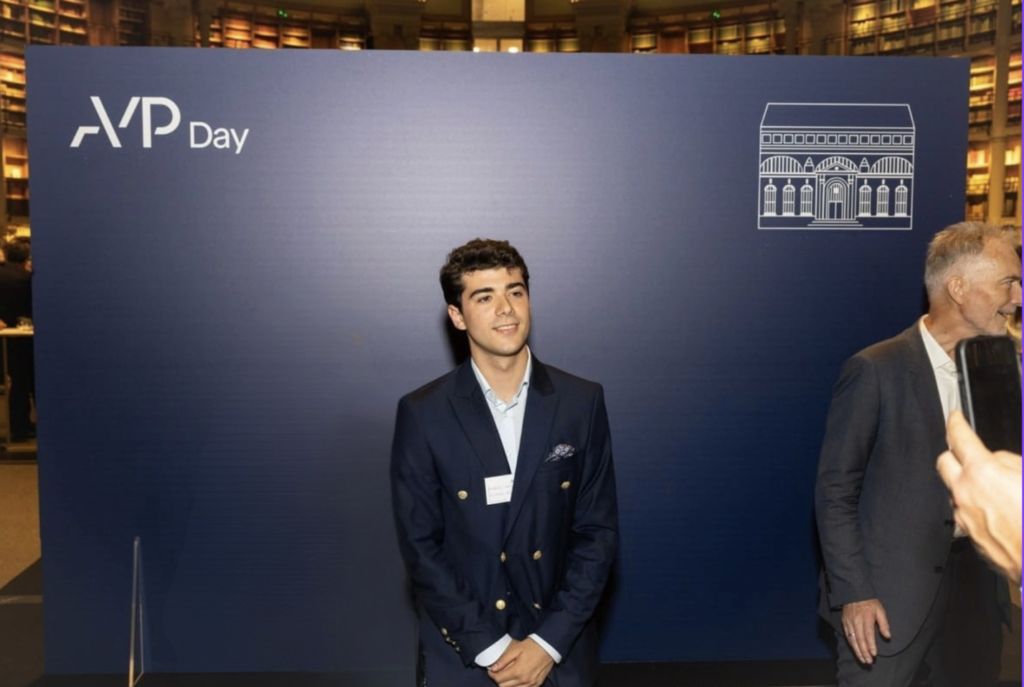
“The beginning of any journey is rarely about the destination. It is about the preparation.”
Andrea Tortella’s story begins in Monaco — a place often associated with glamour, racing yachts, and luxury. Yet for Tortella, the principality represented something entirely different: a rigorous training ground for discipline, strategy, and leadership.
As Captain of the Monaco National Sailing Team, Tortella learned early that success is never the result of individual effort alone. Sailing is a sport where precision, teamwork, and decision-making under pressure determine victory or failure.
Every race demands constant analysis of variables:
- wind direction and speed
- ocean currents
- equipment performance
- crew coordination
- shifting weather patterns
“In sailing, you are essentially processing a live stream of data,” explains a colleague familiar with Tortella’s background. “You make rapid decisions with incomplete information. And you must trust both your instincts and your team.”
These lessons proved foundational. Leadership, Tortella discovered, was not about control or authority. It was about orchestrating complexity.
The captain does not command the wind — he anticipates it.
From the Sea to Strategy: The London Chapter
After years of competitive sailing, Tortella transitioned from athletic excellence to intellectual challenge. He moved to London to study at University College London (UCL), one of the world’s leading academic institutions.
There, he was recognized as a Laidlaw Scholar, a program designed to identify and cultivate future global leaders. The scholarship emphasizes critical thinking, ethical leadership, and research-driven innovation.
While many of his peers pursued careers in consulting, finance, or traditional corporate structures, Tortella’s curiosity led him in a different direction.
He became fascinated with a question that was quietly emerging in the background of the digital economy:
How would artificial intelligence reshape the way information — and advertising — flows across the internet?
At the time, few people were asking this question seriously. But Tortella sensed that a profound transformation was approaching.
The Perplexity Era: Witnessing the AI Shift
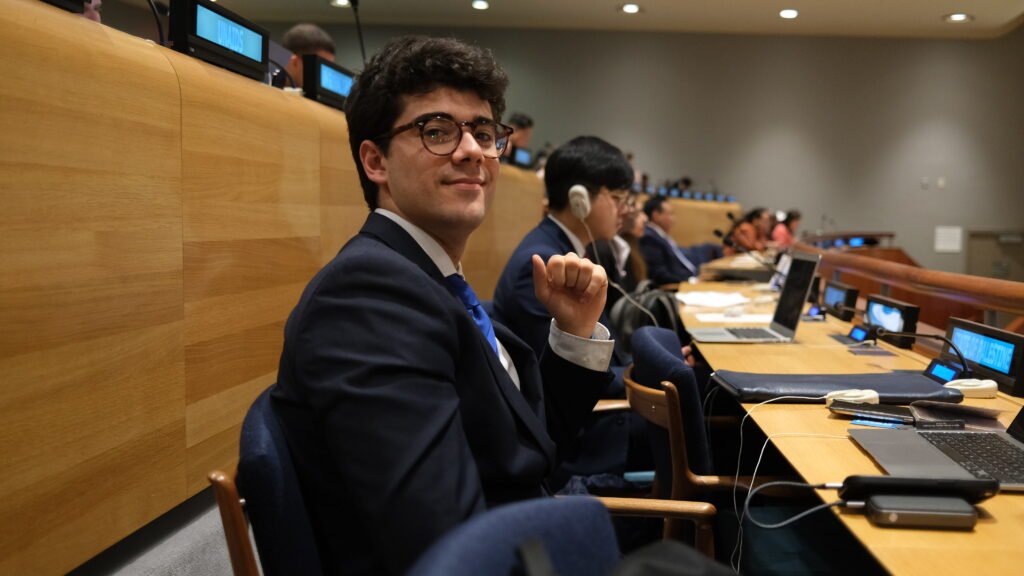
During his undergraduate years, Tortella was not only studying marketing theory — he was actively working in the field.
As artificial intelligence began entering mainstream discussion through Large Language Models (LLMs), he took on a leadership role in marketing initiatives connected with Perplexity, one of the emerging AI search platforms redefining information discovery.
His work involved leading marketing efforts across university campuses throughout the United Kingdom, helping introduce students to a new model of AI-driven knowledge retrieval.
This experience gave Tortella a front-row seat to a technological revolution.
Search behavior was evolving rapidly. People were beginning to ask AI for answers instead of scrolling through links.
However, something else became increasingly clear to him:
While technology was transforming how people accessed information, the monetization system of the internet had barely evolved.
Advertising — the economic engine of the open web — was still dominated by outdated formats:
- intrusive banners
- disruptive pop-ups
- irrelevant retargeting
- cookie-based tracking systems that raised growing privacy concerns
Users disliked them. Publishers struggled with them. Regulators were beginning to challenge them.
Tortella recognized a looming contradiction: if the advertising model collapsed, the free internet itself could weaken.
The web needed something better.
Not just better ads — better infrastructure.
The Meeting of Minds: The Birth of Thrad
Every transformative technology company begins with a partnership that combines complementary strengths.
For Thrad, that partnership formed between Andrea Tortella and Marco Visentin.
Where Tortella brought strategy, industry insight, and leadership, Visentin brought deep technical expertise.
Visentin was conducting advanced research in artificial intelligence while pursuing a PhD at Imperial College London, one of the most prestigious engineering and science institutions in the world.
When the two met and began discussing the future of digital advertising, they quickly realized they shared the same belief:
The industry was approaching a turning point.
Artificial intelligence would soon reshape how content is produced, discovered, and consumed. Yet advertising infrastructure — the financial backbone of the internet — was not prepared for that shift.
Recognizing the scale of the opportunity, Visentin made a bold decision.
He left his doctoral program to build Thrad.
“Leaving a PhD at a top institution is not a casual decision,” Tortella explains. “It reflects conviction. Marco believed, as I did, that what we were building was not simply a company — it was a structural evolution of the digital ecosystem.”
Together, they launched Thrad with a clear objective:
create the most advanced advertising infrastructure designed specifically for the AI-driven web.
The Offering: Reinventing Advertising Infrastructure

Traditional digital advertising relies heavily on cookies and behavioral tracking to deliver targeted messages. Yet increasing privacy regulations and browser restrictions are rapidly phasing out these mechanisms.
Thrad approaches the problem from a different angle.
Rather than relying on intrusive tracking systems, the platform uses advanced AI models to understand context, intent, and relevance.
This enables advertising that feels less like an interruption and more like a natural extension of the content experience.
For major brands and enterprises, Thrad functions as intelligent infrastructure powering their digital campaigns at scale.
For Publishers
The platform provides a monetization pathway that does not overwhelm readers with cluttered ad placements or intrusive tracking technologies.
Publishers can generate revenue while preserving clean, high-quality content environments.
For Brands
Advertisers gain significantly higher engagement rates compared to traditional display ads.
Instead of competing for attention through disruptive formats, brands can integrate messaging that aligns naturally with what users are already interested in.
In essence, Thrad transforms advertising from a distraction into a discovery mechanism.
Overcoming Industry Inertia
Innovating inside the advertising industry presents unique challenges.
Ad-tech is dominated by large, established ecosystems built over decades. Major brands often rely on familiar platforms simply because they are widely adopted.
Introducing a fundamentally new infrastructure requires more than visionary ideas.
It requires trust, proof, and measurable performance.
“Convincing a Fortune 500 CMO to adopt a new advertising model is not easy,” Tortella explains. “These companies manage enormous budgets and complex campaigns. They cannot rely on promises — they need results.”
Early adoption required Thrad to demonstrate clear advantages:
- higher engagement
• improved user experience
• privacy compliance
• scalable performance
As those results became measurable, larger brands began exploring the platform more seriously.
What initially seemed like a radical idea slowly began gaining traction.
Human-Centered Technology
Despite the complexity of the systems he builds, Tortella remains grounded in a simple principle:
technology must serve people.
His leadership style reflects a blend of analytical thinking and human awareness — a balance likely shaped by his background in team-based sport.
Technology alone does not create meaningful impact. It must improve the way people connect with information, businesses, and each other.
This philosophy has shaped Thrad’s rapid growth. Rather than focusing purely on algorithmic performance, the company emphasizes the quality of interaction between users, content, and brands.
Looking Ahead: Navigating the Future
Andrea Tortella still thinks like a sailor.
Markets change. Technologies evolve. Winds shift unexpectedly.
But the key to navigating uncertainty is not resisting change — it is anticipating it.
With Visentin leading AI innovation and Tortella guiding strategic direction, Thrad is positioning itself not simply as another advertising platform, but as a core layer of the next-generation internet economy.
In a digital world where attention is scarce and trust is increasingly valuable, the companies that succeed will be those that create systems aligned with human behavior rather than fighting against it.
For Tortella, the challenge ahead is similar to sailing through unpredictable waters.
The conditions will continue to change.
But those who learn to read the wind will always move first.


