


Edition name – Strategic Transformation & Conscious Productivity
In this special edition of CEO Scoop Magazine, Strategic Transformation & Conscious Productivity, the spotlight turns to Ellen Williams, Founder and CEO of The Salient Strategist, a transformation expert dedicated to helping organizations turn complexity into clarity.
With more than 25 years of experience leading business process and technology transformations, Ellen Williams has built a reputation for guiding organizations from stagnation to scalable growth. Her work focuses on strategic analysis, clear communication, and full-lifecycle project support—ensuring that complex initiatives translate into real operational efficiency and measurable productivity.
Throughout her career, she has led strategic initiatives across diverse sectors including private equity, sustainability, SaaS partnerships, and emerging AI adoption. From enterprise systems such as ERP and CRM to evolving frameworks in ESG and artificial intelligence, Ellen’s approach emphasizes practical execution. By remaining engaged through every phase of transformation—from discovery and strategic planning to Quality Assurance (QA) and User Acceptance Testing (UAT)—she ensures that the solutions organizations implement truly deliver meaningful business outcomes.
Beyond consulting, Ellen is also the host of Time To Press Pause: A Podcast for CEOs by CEOs, where leadership conversations explore the defining moments that shape executives and the power of reflection in decision-making. Through her platform and advisory work, she continues to champion conscious productivity—helping leaders simplify complexity, drive transformation, and build organizations prepared for the future.
Ellen Williams: Turning Complexity into Clarity and Redefining Conscious Productivity

In 1985, a computer was placed on Ellen Williams’ desk with a simple instruction: “Learn it.”
At the time, she was serving as the Executive Assistant to the Vice President at Broadway Video, a postproduction editing company. Technology was not yet embedded into every role the way it is today. It was still specialized, unfamiliar, and somewhat mysterious.
There was no training plan, no onboarding guide—just curiosity and expectation.
So she learned it.
What surprised Ellen was not that she could understand the system, but how naturally the process came to her. Rather than feeling intimidated, she was fascinated. She wanted to explore what the technology could do, how it worked, and how it could make work around her more efficient.
“I didn’t know it at the time,” Ellen reflects, “but that moment would define my entire career.”
As technology evolved, so did she. Over the years, she watched businesses struggle to keep pace with rapidly changing tools and platforms. Yet she noticed something critical: technology itself was never the real challenge.
The real challenge was productivity.
“The real story was never the software,” she explains. “It was how people used it—or failed to use it—to move their work forward.”
That insight became the foundation of her professional journey.
From Technology to Strategic Transformation
As Ellen’s experience deepened, she moved into independent consulting, where she began helping organizations navigate complex systems and operational changes. Her focus expanded beyond technology configuration to something more strategic: understanding how businesses actually function.
She started asking fundamental questions.
What are leaders trying to build?
Where are the bottlenecks?
What is slowing teams down?
Her role became less about implementing tools and more about translating vision into operational reality.
“I learned how to take a vision and map it to process,” she says. “How to align goals with systems so technology supports strategy instead of complicating it.”
When systems are aligned with the way a company truly operates, the transformation is immediate. Teams move faster. Decision-making becomes clearer. Frustration decreases. Technology shifts from being an obstacle to becoming leverage.
Designing these solutions became the part of the work she loved most.
Learning Through Writing and Speaking
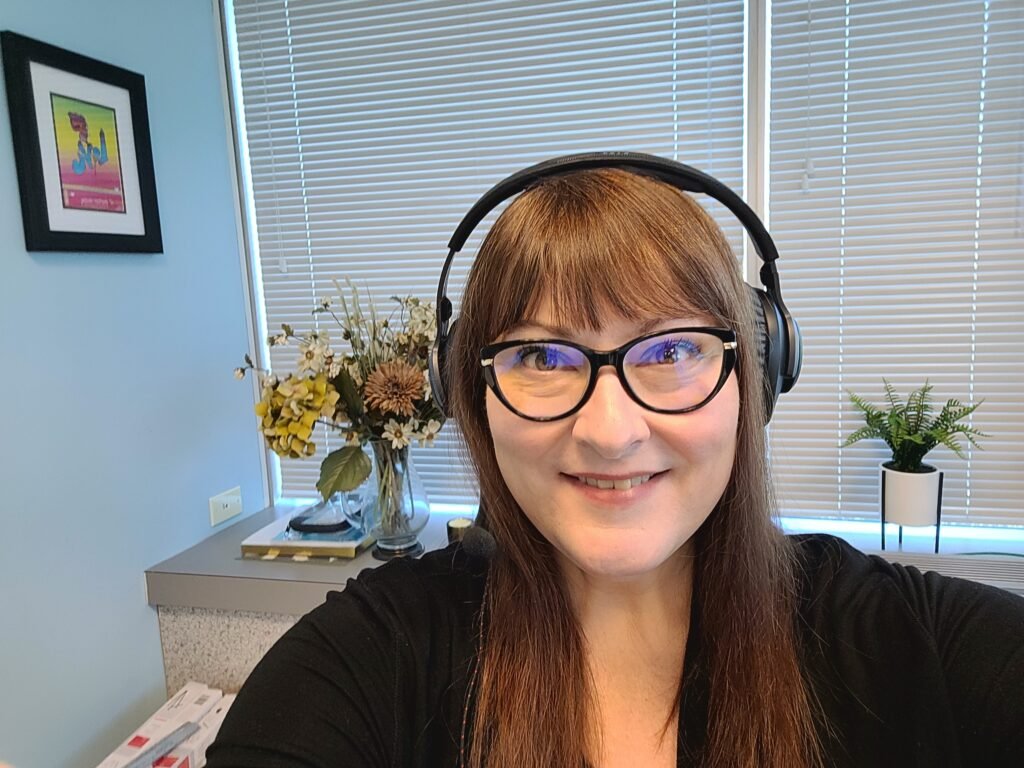
An unexpected opportunity further broadened Ellen’s expertise when she began writing software reviews as a freelance journalist.
Testing applications, evaluating features, and explaining their functionality required her to understand not just how tools worked—but why they mattered.
Writing sharpened her thinking.
“Writing forces clarity,” she says. “And clarity has always been my strength.”
Soon, speaking invitations followed. Ellen found herself presenting at conferences and industry events, translating complex systems and emerging technologies into language business leaders could easily understand.
“I loved helping people see what was possible,” she explains. “When complexity becomes clear, action becomes possible.”
By the early 2000s, Ellen’s experience spanned accounting systems, spreadsheets, HTML, publishing platforms, case management software, and CRM implementations. Her goal was not simply technical proficiency—it was business fluency.
She wanted to understand how organizations truly operate from the inside out.
Living at the Intersection of Change
For more than forty years, Ellen Williams has worked at the intersection of disruption and opportunity.
She has guided companies through platform migrations, leadership transitions, mergers, economic shifts, and now the rapid expansion of artificial intelligence.
Through it all, she has learned a crucial truth.
“Change succeeds because of presence.”
Today, Ellen’s consulting and workshops focus on the human side of transformation. Every engagement begins with leadership vision.
What are they building?
Where are they going?
What needs to change?
From there, she evaluates the real state of the organization—not the polished version, but the one with broken processes, workarounds, incomplete data, and hidden inefficiencies.
Her work is about alignment.
And alignment leads to productivity.
“I’ve built my career on asking the foundational questions,” Ellen says. “What problem are we actually solving? What does success look like in practical terms? Where is the friction?”
When leaders and teams pause long enough to see clearly, transformation becomes achievable.
A Personal Turning Point
Ellen’s philosophy of intentional leadership was also shaped by a deeply personal period of reflection.
At a time when she was questioning her direction—professionally and personally—she encountered Tony Robbins’ book Unleash the Giant Within.
“That book changed everything for me,” she recalls.
It introduced her to a powerful concept: control begins with thought.
Until then, she had been productive but reactive. Capable but not always intentional. The realization that she could choose her responses—and shape her direction—transformed how she approached both work and life.
“When I changed how I thought,” she says, “I changed how I moved.”
That shift sparked decades of personal growth, continuous learning, and disciplined self-reflection.
Leading in Rooms Where She Was the Only Woman
Throughout much of her career in technology and consulting, Ellen often found herself as the only woman in executive meetings.
In the early years, earning attention and credibility required persistence.
“It took time to develop the confidence to speak up without hesitation,” she says. “Sometimes I had to repeat myself. Sometimes I had to assert expertise without apology.”
But experience builds confidence.
First, she learned how to sit comfortably in those rooms.
Then she learned how to lead them.
Her leadership philosophy today is simple and grounded.
“We are all people first,” she explains. “I speak clearly. I listen carefully. I elevate strong ideas regardless of where they come from.”
Presence, she believes, is one of the most powerful leadership skills.
Creating Time in an Accelerated World
Ellen’s work has increasingly expanded beyond technology implementation into a broader mission: helping leaders create clarity and productivity.
This philosophy forms the foundation of her book, Creating Time: The Key to Productivity and Peace.
The premise is deceptively simple.
Time is created.
When actions align with values and systems align with vision, organizations gain capacity. Teams become more productive without becoming more overwhelmed.
Ellen frequently discusses the role of AI in modern organizations.
“AI can remove repetitive tasks,” she explains. “But it cannot replace discernment.”
Technology may accelerate output, but human leadership determines priorities.
She often asks clients a critical question:
“When technology gives you time back, what will you do with it?”
Scroll more? React more?
Or think more strategically?
Creating time requires intention. It requires stepping off autopilot and becoming present enough to choose how energy is spent.
Awards & Professional Certifications

Ellen Williams’ career reflects a commitment to continuous learning, professional excellence, and meaningful contribution to the organizations and communities she serves. Over the years, her work has been recognized through both professional awards and advanced certifications that strengthen her expertise in strategy, transformation, and emerging technologies.
She is honored to have received the Step Up Award during her tenure at Constant Contact, recognizing her proactive leadership, initiative, and commitment to driving impactful results. In addition, she received a Certificate of Appreciation from SCORE, acknowledging her contributions and support toward empowering entrepreneurs and business leaders.
Alongside these recognitions, Ellen has consistently invested in expanding her professional capabilities through specialized certifications and executive education. Her credentials include a Data Analytics Certification from eCornell, equipping her with advanced analytical frameworks to guide data-driven decision-making.
She also holds a Business Process Management Specialist certification from AIIM, reinforcing her expertise in optimizing organizational processes and operational efficiency. Her strategic understanding of sustainability and governance is further supported by an Introduction to ESG certification from Corporate Finance Institute.
Continuing her focus on executive-level strategy and emerging technology, Ellen completed Business Strategy and Artificial Intelligence programs through Wharton Online, strengthening her ability to guide organizations through digital transformation and AI adoption.
Her additional professional qualifications include the Salesforce AI Associate credential, STSI Yellow Belt Training from Systems Thinking Standards Institute, and a Diligence Management Certification from M&A Science.
Together, these recognitions and certifications reflect Ellen Williams’ dedication to lifelong learning and her ongoing commitment to helping organizations navigate complexity, implement meaningful change, and build sustainable growth.
A Vision for the Future of Leadership
Looking ahead, Ellen Williams envisions bringing her message of conscious productivity to larger audiences, corporate boardrooms, and global stages.
Organizations today face unprecedented complexity—regulatory changes, technological acceleration, workforce disruption, and economic volatility.
The instinct is to move faster.
Her advice is different.
“Pause strategically.”
When leaders are present, priorities align and execution improves. Teams understand their contributions, engagement deepens, and productivity rises.
Businesses grow most sustainably when people feel connected to the mission.
“I want leaders to become more intentional,” she says. “When people understand the value of their work, everything changes.”
Bridging Technology and Humanity
Over the decades, Ellen has mapped warehouse processes, engineered CRM implementations for private equity portfolio companies, written white papers on technology adoption, hosted a podcast on leadership burnout, and spoken internationally about presence in a technology-driven world.
The common thread across all of this work is transformation.
And transformation, she believes, is always both technical and human.
“You can implement the best system in the world,” she explains, “but if your people are overwhelmed or disengaged, results will stall.”
Conversely, when teams are aligned and empowered, even imperfect systems can produce extraordinary outcomes.
Many describe Ellen Williams as a bridge—someone who translates between strategy and execution, technology and people.
She agrees with that description.
“That’s exactly what I do.”
Her work enables leaders to shift from reactive decision-making to intentional progress.
And it all began with a single computer placed on her desk in 1985.
“I started my career because someone told me to learn something new,” she says.
“I continue it because learning never ends.”
For Ellen Williams, leadership ultimately comes down to three principles: thinking clearly, leading consciously, and remaining present.
Because in the end, business is human.
And when leaders learn to create time for what truly matters, transformation becomes not only possible—but sustainable.