


Edition – MOST INFLUENTIAL BUSINESS LEADERS MAKING A MARK IN 2026
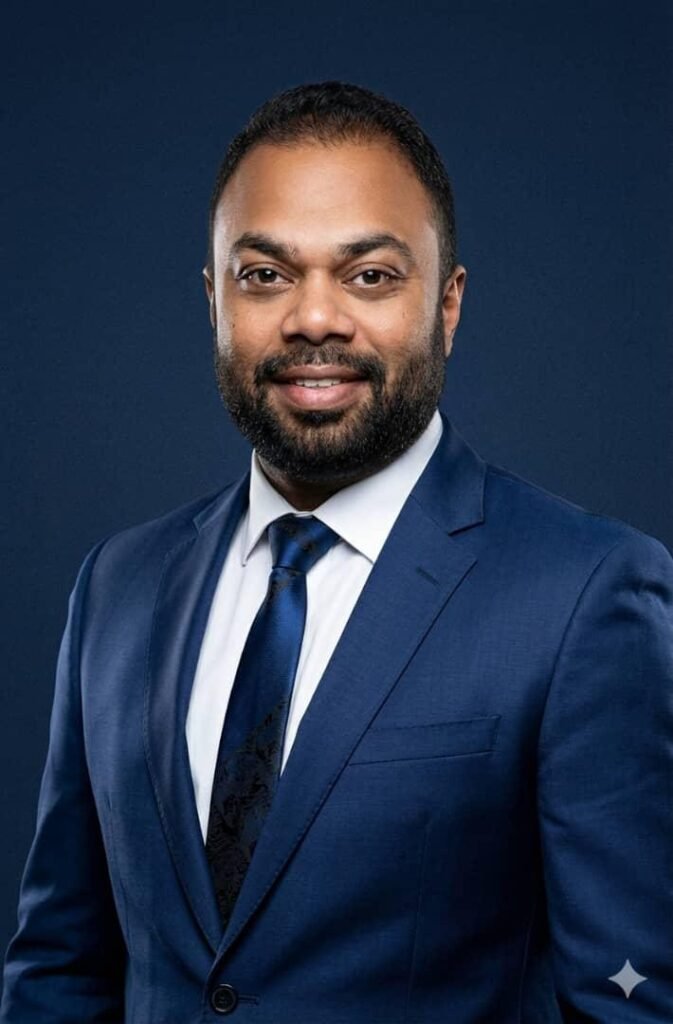
Dr. Pranay Misra stands as a distinguished industry thought leader whose work has helped shape innovation within the global telecommunications and media landscape. Widely recognized for his intellectual depth, resilience, and forward-thinking vision, he has built a reputation as a pioneer whose contributions continue to influence the evolution of telecom technology worldwide.
Known for his creative brilliance and maverick approach to innovation, Dr. Misra has consistently pushed the boundaries of communication technologies. His portfolio of telecom technology patents reflects not only technical mastery but also a profound understanding of the industry’s future direction. Through his research, innovation, and strategic insights, he has contributed solutions that set benchmarks for efficiency, connectivity, and technological advancement.
Over the years, his work has become a reference point within the telecom sector, inspiring professionals and organizations to pursue new standards of excellence. His achievements have earned him international recognition, including multiple global accolades, with further honors expected as his influence continues to expand.
As an industry thought leader, Dr. Pranay Misra represents the intersection of innovation, expertise, and visionary leadership—helping drive the global telecom industry toward a more connected and technologically advanced future.
Q: Please share the beginning of your career journey with us.
Dr. Pranay Misra:
A career journey in the telecommunications industry typically begins with a strong foundation in education combined with hands-on technical training. The telecom sector is unique because it offers well-defined career paths and rapid progression, driven by high demand for specialized skills and clearly structured qualification frameworks. I was fortunate to join this dynamic industry during the 1990 era of communication—a time when the world was experiencing a significant transformation in connectivity and technology.
My professional journey started as a telecom engineer, and over the years it evolved into a leadership role as Chief Technology Officer. This transition was not merely a change in title; it was a strategic shift from executing technical tasks to architecting broader human, technological, and business systems. Looking back, it truly felt like a roller coaster ride—one filled with challenges, opportunities, and calculated risks. I have always considered myself a big risk taker, and those risks ultimately shaped my career.
The early stage of my journey was focused on building a strong technical foundation. For telecom engineers, this means mastering the core elements of communication infrastructure. I developed deep expertise in areas such as network architecture, radio frequency (RF) engineering, and fiber-optic technologies, which are essential for building and maintaining large-scale telecom networks.
As the industry evolved, specialization became increasingly important. I expanded my knowledge into high-demand areas such as 5G deployment, cloud-native networking, and Internet of Things (IoT) infrastructure. Continuous learning and certifications also played a critical role in validating expertise. Industry-recognized credentials such as Cisco CCNP, PMP, and NVIDIA AI Infrastructure certifications helped strengthen my professional credibility and technical capabilities.
However, technical mastery alone does not lead to executive leadership. The next step in my journey required transitioning into leadership roles and developing the ability to multiply impact through teams. I began taking on responsibilities as a Lead Engineer and Team Lead, managing projects and guiding teams while developing skills in delegation, collaboration, and conflict resolution.
Over time, I progressed into roles such as Engineering Manager and Vice President of Engineering, where my focus shifted from solving individual technical problems to shaping broader technical strategies and aligning engineering efforts with organizational goals. These roles required me to bridge the gap between technical teams and other business departments.
Another critical phase of my career was developing business acumen. A CTO is not just a technologist but also a strategic business leader. I had to understand financial management, budgeting, return on investment, and cost structures associated with large-scale telecom infrastructure. Strategic vision also became essential—anticipating future industry developments such as the transition from 5G toward 6G technologies and positioning organizations to stay ahead of competition.
At the executive level, technical expertise is assumed, but the true value of a CTO lies in leadership and strategic impact. A CTO must translate complex technological concepts into meaningful business outcomes for stakeholders, including CEOs, board members, and investors. The role also requires balancing innovation with governance, ensuring that technological advancements comply with strict telecom regulations and cybersecurity standards.
Looking back, the journey from telecom engineer to CTO has been a combination of technical expertise, leadership growth, strategic thinking, and a willingness to take bold steps. It has been an exciting journey shaped by innovation, continuous learning, and a deep passion for building systems that connect the world.
Q: What are your long-term goals, and where do you envision yourself in the coming years?
 Dr. Pranay Misra:
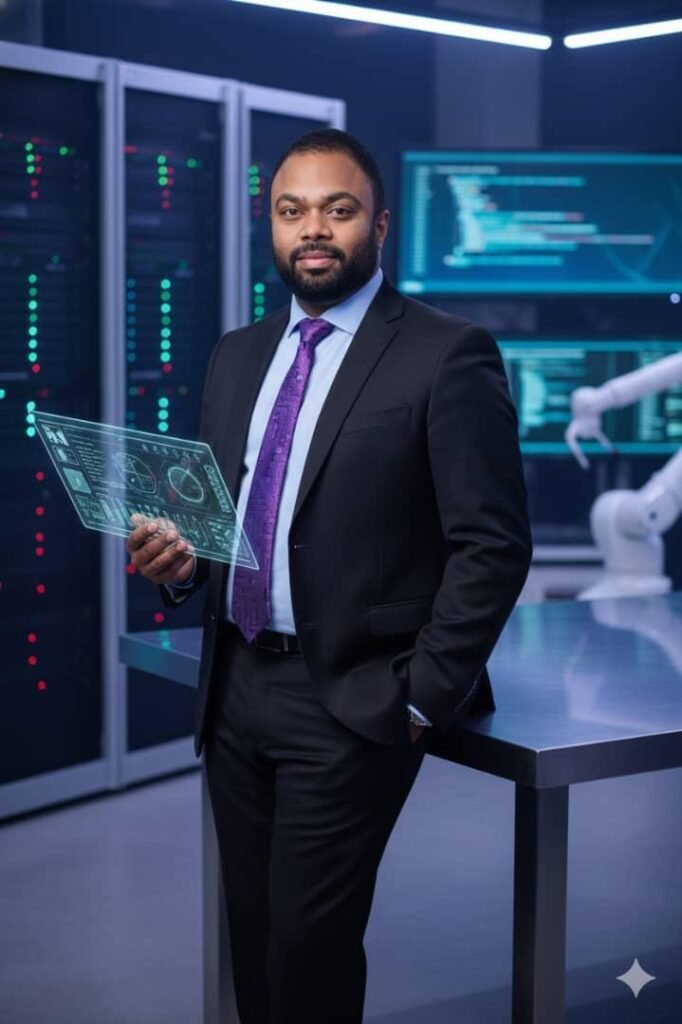
Looking ahead, my long-term vision is closely aligned with the next wave of global technological transformation—particularly in the areas of AI data centers and critical minerals supply chains. In 2026 and beyond, my focus is on contributing to the development of resilient infrastructure that supports the rapid growth of artificial intelligence while strengthening global supply chains. Achieving infrastructure sovereignty and supply chain resilience will be essential for maintaining leadership in artificial intelligence and advanced technologies.
One of my primary strategic goals is to support the expansion of AI data center infrastructure. As artificial intelligence continues to scale, the demand for computing power and energy is rising at an unprecedented rate. My objective is to help accelerate the development of large-scale AI data centers by encouraging streamlined infrastructure development and innovative energy strategies.
A key element of this vision involves energy independence for AI infrastructure. With the growing energy demands of hyperscale data centers, it will become increasingly important for technology companies to develop or secure their own power generation capabilities. This approach ensures that infrastructure expansion does not place additional strain on public energy resources while enabling sustainable growth in AI capabilities.
Another important focus area is the development of high-security mega data center facilities, particularly those supporting next-generation AI workloads. These giga-scale facilities will require advanced power systems, specialized infrastructure, and strong security frameworks. My thought leadership emphasizes collaborating with industry partners to design and support these large-scale AI environments.
At the same time, grid modernization will be critical to supporting the massive increase in electricity demand driven by AI technologies. Research suggests that electricity consumption from AI data centers could reach up to 12 percent of total U.S. electricity usage by 2030, making it essential to upgrade more than 100,000 miles of transmission infrastructure over the coming decade.
In parallel, another key focus of my long-term vision is critical minerals strategy, which has become increasingly important for the global technology ecosystem. Critical minerals such as copper, lithium, nickel, and rare earth elements form the physical backbone of the AI and electronics supply chain. Without reliable access to these materials, the growth of AI infrastructure would slow significantly.
One of the most effective approaches to addressing this challenge is through domestic extraction and advanced recycling technologies. The United States already possesses vast reserves of electronic waste, battery waste, and discarded magnets stored in landfills. Through advanced processes such as hydrometallurgy, these materials can be refined and transformed into valuable critical minerals. Recycling offers a faster and more sustainable solution compared to traditional mining, which often requires a decade or more to develop new sites.
Another important goal is strengthening market protection mechanisms for critical minerals. Establishing preferential trading frameworks and price stabilization mechanisms can encourage domestic production while protecting supply chains from geopolitical risks and foreign market manipulation.
Strategic stockpiling initiatives will also play an important role. Creating national reserves of essential minerals can help stabilize supply chains and ensure the availability of materials required for future infrastructure projects.
In today’s world, the execution of AI data center projects is no longer simply about software, energy, or hardware. It has become a high-stakes competition for critical minerals, which are essential components of the entire AI technology stack. Their availability directly determines how quickly AI infrastructure can be deployed.
One of the most promising developments is the concept of urban mining—treating existing electronic waste and infrastructure as a secondary resource for extracting valuable materials. Recycling technologies are now creating a secondary supply buffer, reducing reliance on traditional mining operations and providing faster access to critical materials.
Studies suggest that recycled materials such as copper, cobalt, and nickel could meet up to 40 percent of global demand by 2050, significantly improving supply chain resilience. In addition, recycling consumes approximately 80 percent less energy than primary mining, helping major technology companies meet their sustainability and Net Zero goals while scaling infrastructure.
Technological advancements are also transforming mineral recovery processes. AI-enhanced sorting technologies are now capable of identifying and separating valuable components from complex electronic systems with precision that surpasses manual methods. These innovations are unlocking materials that were previously considered unrecoverable.
Ultimately, my vision is to help shape a future where AI infrastructure, energy systems, and critical mineral supply chains operate in harmony. By aligning technology innovation with sustainable resource management and resilient infrastructure strategies, we can ensure that the global AI ecosystem continues to grow responsibly and efficiently.
The coming years will be defined by how well we prepare for this transformation—and I look forward to contributing to this critical evolution of technology and infrastructure.
Q: Who has been the most significant source of inspiration in your life?
Dr. Pranay Misra:
The most significant source of inspiration in my life has been a powerful combination of influences—my parents, who shaped my core values, and my wife, who helped refine my professional vision. Both played equally important roles in shaping who I am today.
My father Mr.P.H Misra & My Mother Late. Shanta Misra instilled in me the foundational principles of integrity, resilience, and discipline and I was always known as a mommy boy and after marriage “Joru Ka Gulam” means Obedient Husband of Shruti Misra ( Honey Misra). They taught me the importance of staying grounded, working hard, and maintaining a strong moral compass regardless of circumstances. Those early lessons became the internal framework that continues to guide my decisions both personally and professionally. My wife played a significant backbone role at every stage of my life and my 3 children Ms. Pranati Misra a future Billionaire Entrepreneur who has great visions on AI sustainable projects , My Son a Future Real Estate & Jewelry Billionaire Entrepreneur and my third child Ms Parinika Misra a future Doctor who always gives me feedback how I need to fine tune my thinking based on situations and act rather react. Coaching starts from home!.
At the same time, my corporate mentors and professional gurus have been instrumental in transforming that foundation into strategic leadership. Through their guidance, I learned how to navigate complex business environments, make high-stakes decisions, and think beyond immediate challenges toward long-term technological and organizational impact.
This blend of unconditional support from home and rigorous accountability from the boardroom has created a unique synergy in my life. It allows me to approach the fast-evolving worlds of telecommunications and artificial intelligence with both a grounded perspective and a forward-looking strategic mindset.
In many ways, my journey reflects the influence of both worlds—values learned at home and leadership lessons learned through experience. Together, they have enabled me to pursue innovation while remaining committed to responsibility, vision, and purpose.
Q: Please list some of the notable recognitions and accreditations that you have received.
Dr. Pranay Misra:
Throughout my career in the telecommunications industry, I have been fortunate to receive recognition for both technical innovation and thought leadership. In a field where technology and strategy constantly evolve, acknowledgment from respected global platforms and institutions is both humbling and motivating.
My research work and insights on telecommunications technology, innovation, and emerging infrastructure trends have been featured in prestigious international business publications such as Forbes, Fortune, and Business Insider. These opportunities allowed me to share thought leadership on the future of telecom networks, artificial intelligence infrastructure, and global technology ecosystems with a wider professional audience.
In addition to these recognitions, I have also been honored with distinguished awards from the Government of India, including the Padma Bhushan, Padma Shree Samman and the Bharat Gaurav Samman. Receiving these honors has been an incredibly meaningful milestone in my journey, as they represent recognition of contributions toward technological advancement and global industry leadership.
These recognitions serve not only as personal achievements but also as reminders of the responsibility to continue driving innovation, contributing to research, and helping shape the future of the telecommunications and artificial intelligence industries.
Q: What were the most challenging obstacles you’ve encountered in your career?
Dr. Pranay Misra:
Over the course of my career, the nature of challenges has evolved significantly. In the early years as a telecom engineer, most obstacles were technical—network reliability, infrastructure performance, and system optimization. However, as I progressed into leadership roles and eventually into the executive space, the challenges shifted from solving technical puzzles to navigating complex human, business, and geopolitical landscapes.
One of the most significant obstacles I encountered was what I call the “language barrier” between engineering and the boardroom. In engineering, success is often binary: a network either works or it does not. However, when you step into executive leadership, the conversation changes entirely. You are no longer discussing latency, packet loss, or throughput. Instead, you are presenting multi-billion-dollar infrastructure investments to stakeholders who are focused on EBITDA, return on investment, and risk mitigation.
The lesson I learned was that a technology leader must become bilingual—able to translate complex engineering concepts such as 5G architecture or AI data center efficiencies into clear business outcomes that resonate with investors and executive leadership. Put last slide first just articulate in simple language for a problem statement.
Another major challenge has been geopolitical supply chain volatility, particularly as telecommunications infrastructure and artificial intelligence technologies increasingly depend on critical minerals and specialized components. In recent years, sudden shifts in export controls for materials such as gallium and germanium have demonstrated how global politics can instantly impact long-term technology roadmaps.
This experience taught me the importance of building resilient and diversified supply chains. Relying on a single source for critical components is no longer viable. Organizations must invest in strategies such as friend-shoring, domestic manufacturing capabilities, and advanced recycling technologies long before a crisis occurs.
A third challenge has been scaling human infrastructure during periods of rapid technological advancement. Breakthroughs in areas like artificial intelligence, cloud-native networking, and hyperscale data centers are evolving at extraordinary speed. However, the human workforce often struggles to keep pace.
The most difficult part is not building the technology—it is building the talent ecosystem capable of operating and innovating within it. Recruiting and upskilling engineers who understand both traditional telecom systems and AI-driven infrastructure remains a persistent challenge. I learned that a CTO must also act as a Chief Talent Officer, fostering a culture of continuous learning that evolves as rapidly as the technology itself.
Finally, one of the most delicate challenges is balancing innovation with legacy stability. Telecommunications networks are not just business systems—they are critical national infrastructure relied upon by millions of people every day. Unlike some technology sectors where experimentation is encouraged, telecom leaders cannot simply “move fast and break things.”
Integrating emerging technologies such as AI automation, cloud-native architecture, and next-generation network capabilities into existing 4G and 5G systems requires careful orchestration. Even small disruptions can impact millions of users.
Through this experience, I learned that leadership in telecom requires strategic orchestration—knowing when to introduce disruptive innovation and when to protect the stability of the core network that society depends on.
Each of these challenges has shaped my leadership philosophy. Technical knowledge is essential, but the real test of leadership lies in navigating uncertainty, aligning technology with strategy, and building resilient systems—both technological and human—that can withstand the complexity of a rapidly evolving global industry.